1. Introduction
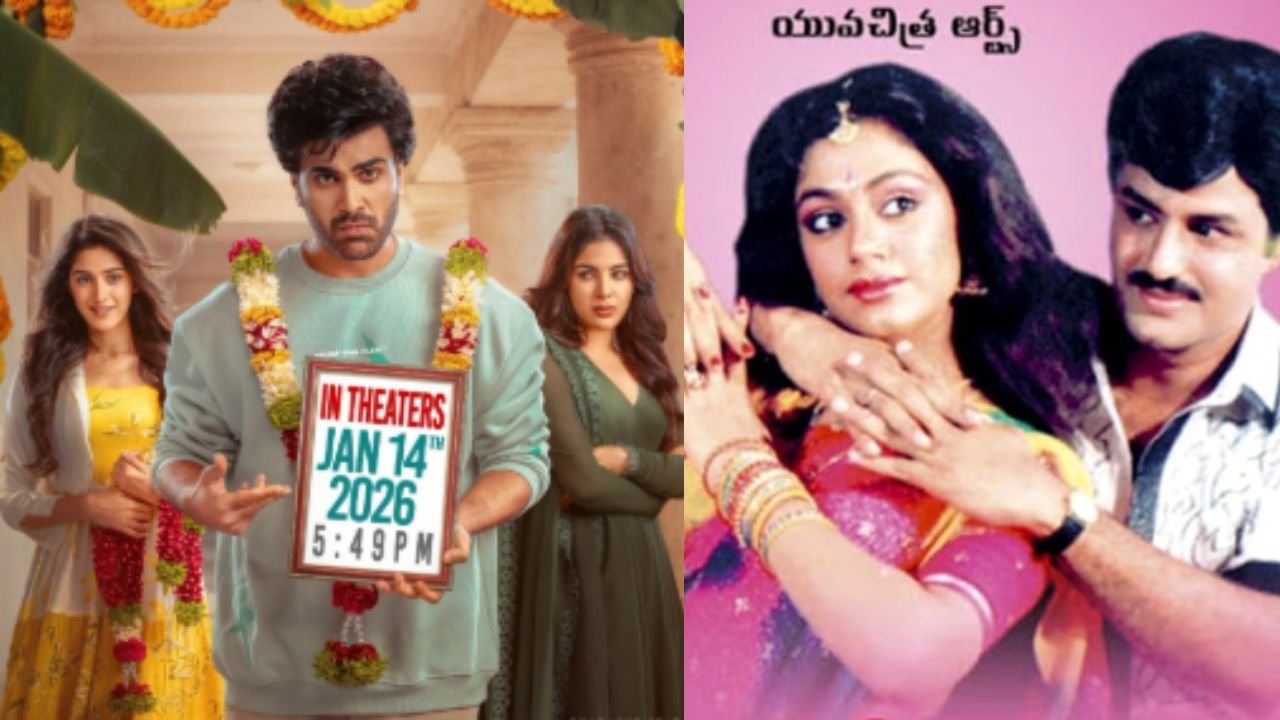
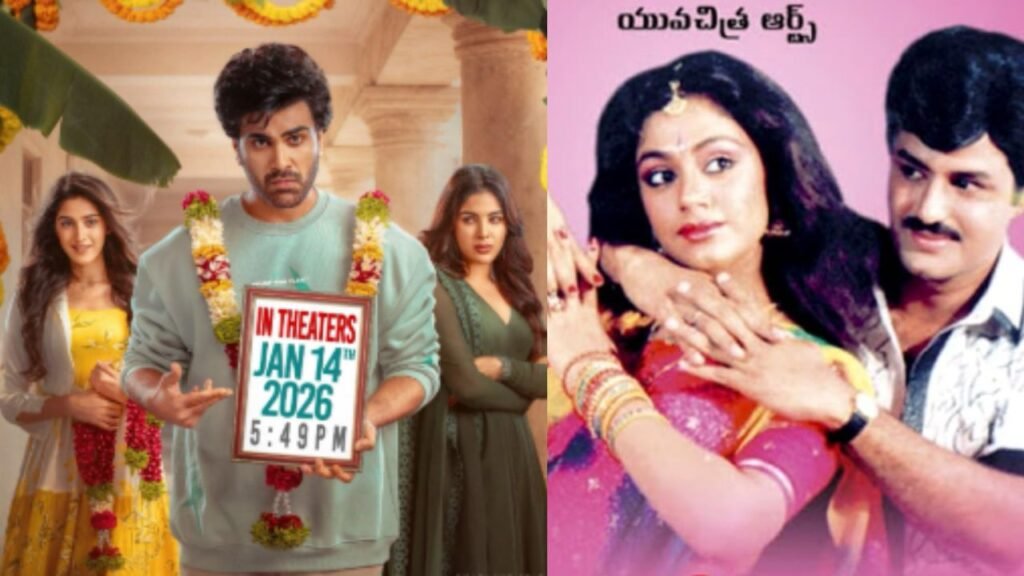
Telugu cinema has witnessed a unique phenomenon with “Nari Nari Naduma Murari” spanning two distinct eras. While the 1990 classic starring Nandamuri Balakrishna captured hearts during Tollywood’s golden age of family entertainers, the 2026 version featuring Sharwanand brings a fresh perspective to romantic comedy in the streaming era. This comparison examines how a shared title bridges 36 years of cinematic evolution, exploring what remains timeless and what has transformed in Telugu storytelling.
The significance of this comparison extends beyond mere nostalgia. As 2026 audiences embrace modern narratives while celebrating legacy cinema, understanding these parallel journeys offers insights into changing audience preferences, technological advancements, and the evolution of Telugu film culture.
2. Overview: Then vs Now
| Aspect | 1990 Version | 2026 Version |
|---|---|---|
| Release Year | April 27, 1990 | January 14, 2026 |
| Genre | Romantic Comedy Family Drama | Romantic Comedy |
| Director | A. Kodandarami Reddy | Ram Abbaraju |
| Production | K. Murari (Yuva Chitra Arts) | Anil Sunkara, Ramabrahmam Sunkara (AK Entertainments) |
| Runtime | 2 hours 17 minutes | 2 hours 40 minutes |
| Languages | Telugu | Telugu, Tamil, Hindi, Malayalam, Kannada |
| Box Office Status | Super Hit (100+ days in 3 centers) | Rs 24.89 crore (theatrical) |
| OTT Platform | N/A (Theatrical only) | Prime Video (Feb 4, 2026) |
3. Cast Comparison
🎭 1990 Version: Iconic Performances
The original film marked a milestone as Nandamuri Balakrishna’s 50th movie. The veteran actor portrayed Venkateswara Rao (Venkanna), bringing his trademark energy to a character caught between two sisters.
Lead Cast:
- Nandamuri Balakrishna as Venkateswara Rao – Delivered a balanced performance combining comedy and romance
- Shobana as Shobha – One of the sisters competing for Venkanna’s affection
- Nirosha as Neeru – The other sister in the romantic triangle
- Sharada as Sesharatnam – The domineering mother who prioritizes appearances
Supporting Cast:
- Kaikala Satyanarayana as Veerabhadraiah
- Allu Ramalingaiah in a pivotal role
- Anjali Devi as Janakamma
The chemistry between Balakrishna and the two leading ladies became a talking point, with critics praising how the trio balanced comedy and emotional depth.
🌟 2026 Version: Star Power + New Faces
The modern iteration brings together contemporary Telugu cinema’s most reliable performers, led by the charming Sharwanand.
Lead Cast:
- Sharwanand as Gautham – An architect who navigates complex romantic and family dynamics
- Samyuktha Menon as one of the female leads – Brought natural chemistry to the role
- Sakshi Vaidya as the other female lead – Made a strong impression in limited screen time
- Naresh Vijayakrishna as Ramalingaiah (divorce lawyer) – Emerged as the film’s biggest asset with impeccable comic timing
Supporting Cast & Special Appearances:
- Sunil in a significant supporting role
- Vennela Kishore adding his signature comedy
- Sampath Raj
- Sree Vishnu in a special cameo appearance
🔥 Spotlight: Cast Chemistry Showdown
The 1990 version benefited from Balakrishna’s established star power and his ability to carry family entertainers. His pairing with Shobana and Nirosha created memorable on-screen moments that resonated with rural and urban audiences alike.
In 2026, Sharwanand’s natural acting style and Naresh’s scene-stealing performance became the film’s strengths. Critics particularly praised Naresh’s comedic timing, with multiple reviews citing him as the film’s standout performer. However, some reviewers noted that the female leads had limited scope to showcase their full potential.
Fan reactions suggest that 1990 audiences connected deeply with Balakrishna’s larger-than-life persona, while 2026 viewers appreciated Sharwanand’s relatable, understated approach to romance and comedy.
4. Story & Screenplay
📜 Original Plot (1990)
Set in the fictional village of Nakkabokkalapadu, the 1990 film centered on family tensions and romantic complications. The story followed Venkanna, whose arrival disrupts the household of his domineering aunt Sesharatnam. Both her daughters unexpectedly develop feelings for their cousin after their father arranges for one of them to marry him.
Key Themes:
- Traditional arranged marriage customs
- Family reconciliation across generations
- Rural Telugu village life and values
- Mother-son relationships and family honor
Cultural Context: The film reflected early 1990s Telugu society where joint families, arranged marriages, and village-based narratives dominated commercial cinema. The humor derived from situational comedy and character eccentricities rather than contemporary references.
📖 Reimagined Plot (2026)
The 2026 version presents a completely different narrative despite sharing the title. Gautham, an architect, supports his father Karthik’s decision to marry a woman 30 years younger, demonstrating that love transcends age boundaries. However, when Gautham falls for Nithya, he faces opposition from her father Ramalingaiah, a prominent divorce lawyer skeptical of love marriages.
The conflict escalates when Ramalingaiah challenges the couple’s understanding of true love, ultimately agreeing to their marriage only through a court registration. The story takes unexpected turns when complications arise at the registrar’s office.
Modern Elements:
- Professional characters (architects, lawyers)
- Questions about the nature of love and compatibility
- Urban settings (Kerala, registration offices)
- Themes of parental approval vs. personal choice
- Age-gap relationships treated progressively
New Subplots: The 2026 film incorporates workplace dynamics, inter-generational perspectives on marriage, and the tension between traditional expectations and modern relationships.
🔄 Comparison: Story Evolution
The two films share only their title and the broad concept of romantic triangles. The 1990 version focused on two sisters competing for one man within a traditional family setting, while the 2026 film explores a man navigating relationships with two women while dealing with parental opposition.
What Changed:
- Setting shifted from rural village to urban professional environments
- Focus moved from extended family dynamics to nuclear family conflicts
- Comedy evolved from physical and situational to dialogue-driven wit
- Female characters gained more agency and complexity
What Was Retained:
- The essence of “Lord Krishna between two women” from the title
- Family entertainment appeal
- Blend of romance and comedy
- Sankranthi festival release timing
Fan Expectations vs Execution: 2026 audiences did not expect a remake or sequel, as the title was revealed only in January 2025. Critics noted that while the modern film delivers entertainment, it follows predictable romantic comedy patterns. Some viewers expressed disappointment with the second half’s pacing, whereas the 1990 film maintained consistency throughout most of its runtime.
5. Visual Style & Production Design
🎬 Cinematography & Visual Language
1990 Version: Cinematography by A. Vincent employed the characteristic style of early 1990s Telugu cinema – bright, colorful frames emphasizing the vibrancy of village life. Shot in locations including Gobichettipalayam, the film used traditional camera techniques with limited camera movement, focusing on medium and close-up shots to capture performances.
The color palette featured bold, saturated hues typical of the era – bright yellows, reds, and greens reflecting the festive atmosphere of Telugu family dramas. Lighting was theatrical and even, ensuring every frame was clearly visible even in single-screen theaters.
2026 Version: Directors of Photography Gnana Shekar VS and Yuvraaj brought contemporary visual aesthetics to the film. Shot digitally with modern equipment, the cinematography features dynamic camera movements, natural lighting setups, and a more muted, realistic color grading suitable for both theatrical and OTT viewing.
The Kerala portions showcase lush greenery and scenic backdrops, while urban sequences employ sleek production design. The aspect ratio of 2.39:1 provides a cinematic widescreen experience, contrasting sharply with the 1990 film’s standard ratio.
👗 Costumes & Art Direction
1990: Costumes reflected traditional Telugu fashion – colorful sarees for women, dhotis and traditional wear for men, emphasizing cultural authenticity. Art direction by Brahma Kadali created elaborate village sets with attention to period-appropriate details.
2026: Modern styling showcases contemporary fashion – casual wear, professional attire for office sequences, and trendy outfits for romantic portions. The art direction balances traditional elements (when needed) with contemporary design aesthetics, creating visually distinct environments for different narrative segments.
6. Music & Soundtrack
🎵 1990 Version
Legendary composer K.V. Mahadevan crafted the soundtrack, featuring vocals by S.P. Balasubrahmanyam and P. Susheela. The album included memorable tracks that became popular across Telugu-speaking regions.
Notable Songs:
- “Duttala Uunave Rattammatta” – SP Balu
- “Dwaparamanta Savathula Santa” – SP Balu, P. Susheela
- “Em Maayoo Tadumutunadi” – SP Balu, P. Susheela
- “Manasu Loni Marmamulu Telusuko” – SP Balu, P. Susheela
- “Pellantune Vedikkinde Gaali” – SP Balu, P. Susheela
- “Vayasu Sogasu Kalisina Vela” – SP Balu, P. Susheela
Music was released on Lahari Music Company. One track, “Em Vaana,” was reportedly inspired by Ilaiyaraaja’s “Naan Thedum Sevvanthi” from the Tamil film Dharma Pathini (1986).
🎶 2026 Version
Vishal Chandrasekhar composed the music for the modern version, bringing contemporary musical sensibilities to the romantic comedy. While specific chartbuster status is still developing, the soundtrack aligns with current Telugu film music trends – mixing melody with rhythmic elements suitable for social media promotion.
The music received decent response from audiences, though it did not dominate charts as significantly as some other Sankranthi 2026 releases.
7. Cultural Impact
💥 In 1989-1990
Released during the summer vacation period, the original film benefited from Balakrishna’s dedicated fan base and strong theatrical distribution. As his 50th film, it held special significance in consolidating his position as a leading Telugu star.
Box Office Performance: Declared a “Super Hit,” the film sustained theatrical runs exceeding 100 days in three centers – a significant achievement in the competitive 1990 Telugu film landscape where it competed with movies like Nagarjuna’s “Shiva.”
Audience Craze: The film attracted family audiences during the summer season, with multiple songs becoming radio favorites. Village and small-town audiences particularly connected with the rural setting and family-oriented narrative.
Legacy in Pop Culture: The title became part of Telugu cinema’s lexicon, referencing the classic “man between two women” scenario. The film contributed to Balakrishna’s image as a versatile actor capable of both action and family entertainment roles.
📈 In 2026
Released during the highly competitive Sankranthi 2026 season, the film carved a niche despite facing releases from bigger stars and franchises.
Theatrical & Digital Performance: The film collected Rs 14.2 crore in its first week and Rs 24.89 crore after 21 days in theaters – a respectable performance for a mid-budget entertainer during the festival season. The unusual 5:49 PM premiere timing (chosen for auspicious Hindu calendar considerations) generated discussion.
Streaming & Global Reach: Remarkably, the film premiered on Amazon Prime Video just three weeks after theatrical release on February 4, 2026. Available in five languages (Telugu, Tamil, Hindi, Malayalam, Kannada) with English subtitles, it reached global audiences across multiple markets.
Social Media Impact: The quick OTT turnaround generated conversations about changing theatrical windows in Indian cinema. The film’s presence on Prime Video allowed diaspora audiences and younger viewers who missed theatrical runs to access it conveniently.
8. Fan Reactions & Social Media Buzz
Nostalgia vs. Fresh Take Debates
Online discussions revealed generational divides in reception. Older audiences who remembered the 1990 film appreciated that the new version didn’t attempt a direct remake, preserving their nostalgia. Younger viewers evaluated the 2026 film independently, with mixed reactions to its conventional romantic comedy structure.
Critical Social Media Conversations
Twitter/X and Instagram discussions highlighted Naresh’s performance as a consensus favorite. However, some viewers criticized the film for normalizing questionable relationship dynamics and regressive portrayals of female characters’ decision-making.
Platform-Specific Trends
The film’s rapid OTT availability limited long-tail theatrical business but expanded its reach. Streaming data (not publicly disclosed) suggests significant viewership across age groups on Prime Video.
- Mismatched Season 4 Cast: Who’s Returning & Who’s Not?
- Zendaya’s Wedding Takes a Dark Turn in “The Drama” Trailer — Fans Are Shocked
9. Critical Reception
1990: Reviews Then
Contemporary reviews praised Balakrishna’s performance and the film’s entertainment value. Griddaluru Gopalrao of Zamin Ryot offered dissenting views, criticizing certain story elements. Overall, trade analysts declared it commercially successful, contributing to Balakrishna’s market standing.
2026: Critics & Audience Scores
Professional Reviews:
| Publication | Rating | Key Verdict |
|---|---|---|
| Sakshi Post | 3.25/5 | “Strong performances and consistent fun” |
| News18 | 3.2/5 | “Sankranti entertainer with situational comedy” |
| India Today | 3/5 | “Clean family entertainer with limitations” |
| 123Telugu | 3.25/5 | “Reasonably engaging Sankranthi entertainer” |
| The Hindu | N/A | “Lightweight rom-com with purpose” |
| GreatAndhra | N/A | “Good start, weak end; okay festive watch” |
Common Praise:
- Sharwanand’s comfortable comedy performance
- Naresh’s scene-stealing comic timing
- First half entertainment value
- Clean, family-friendly content
Common Criticisms:
- Predictable plot developments
- Weak second half execution
- Limited scope for female leads
- Conventional narrative structure
- Emotional moments could be handled better
IMDb Ratings:
- 1990 Version: 6.8/10
- 2026 Version: Currently showing higher engagement
10. Key Takeaways
What Worked Better in 1990?
Consistency: The original maintained entertainment levels throughout its runtime without the second-half slowdown that affected the 2026 version.
Balakrishna’s Star Power: His established presence and ability to carry family entertainers single-handedly contributed significantly to the film’s success.
Cultural Resonance: The village setting and traditional family dynamics resonated strongly with the era’s audience expectations.
Theatrical Legacy: Extended 100+ day runs in multiple centers established lasting cultural impact.
What’s New & Exciting in 2026?
Contemporary Themes: Modern relationship dynamics, professional characters, and progressive elements like accepting age-gap relationships.
Technical Excellence: Superior cinematography, production values, and visual storytelling techniques.
Multi-Platform Accessibility: Quick OTT release and multi-language availability expanded audience reach exponentially.
Naresh’s Performance: Critics unanimously praised his comedic contributions, offering a masterclass in supporting actor impact.
Pan-India Potential: Release in five Indian languages positions it for broader demographic appeal.
Verdict
Best for Nostalgic Fans: The 1990 version remains the quintessential Telugu family entertainer of its era, perfect for those seeking traditional storytelling with established stars.
Best for Modern Audiences: The 2026 version offers contemporary relationship narratives, professional production values, and convenient streaming access – ideal for viewers wanting relatable, current content.
Neither film attempts to replace the other. They represent distinct cinematic moments separated by 36 years of industry evolution, audience transformation, and technological advancement.
11. Conclusion
The journey of “Nari Nari Naduma Murari” from 1990 to 2026 illustrates Telugu cinema’s remarkable evolution. While the original captured an era of theatrical dominance, extended runs, and star-driven narratives rooted in village life, the modern version reflects streaming-era realities, urban professional settings, and faster content consumption patterns.
Summary of Major Differences
The films differ fundamentally in story (family drama vs. urban romance), settings (village vs. city), star personas (action hero in comedy vs. romantic lead), technological execution (film vs. digital), and distribution models (theatrical-only vs. hybrid theatrical-OTT).
Final Thoughts: Legacy Continues or Reinvented?
The 2026 film represents reinvention rather than continuation. By adopting only the title’s essence while creating an entirely new narrative, it respects the original’s legacy without constraining itself to replication.
This approach benefits both films – the 1990 version retains its standalone cultural significance, while the 2026 iteration establishes independent identity. For Telugu cinema enthusiasts, both films offer valid entertainment propositions shaped by their respective eras’ possibilities and preferences.
As streaming platforms preserve older classics while promoting new releases, audiences can now experience both versions, understanding how Telugu cinema has simultaneously changed and remained committed to its core mission: entertaining families across generations.
Disclaimer: This article presents factual information about both films based on verified sources. Box office figures and review scores reflect available data as of February 2026. Individual viewing experiences may vary.

Asif Ali is an entertainment content creator and movie enthusiast at Movie Trend. I covers the latest movie news, OTT updates, and trending entertainment stories with a focus on accuracy, originality, and reader value.