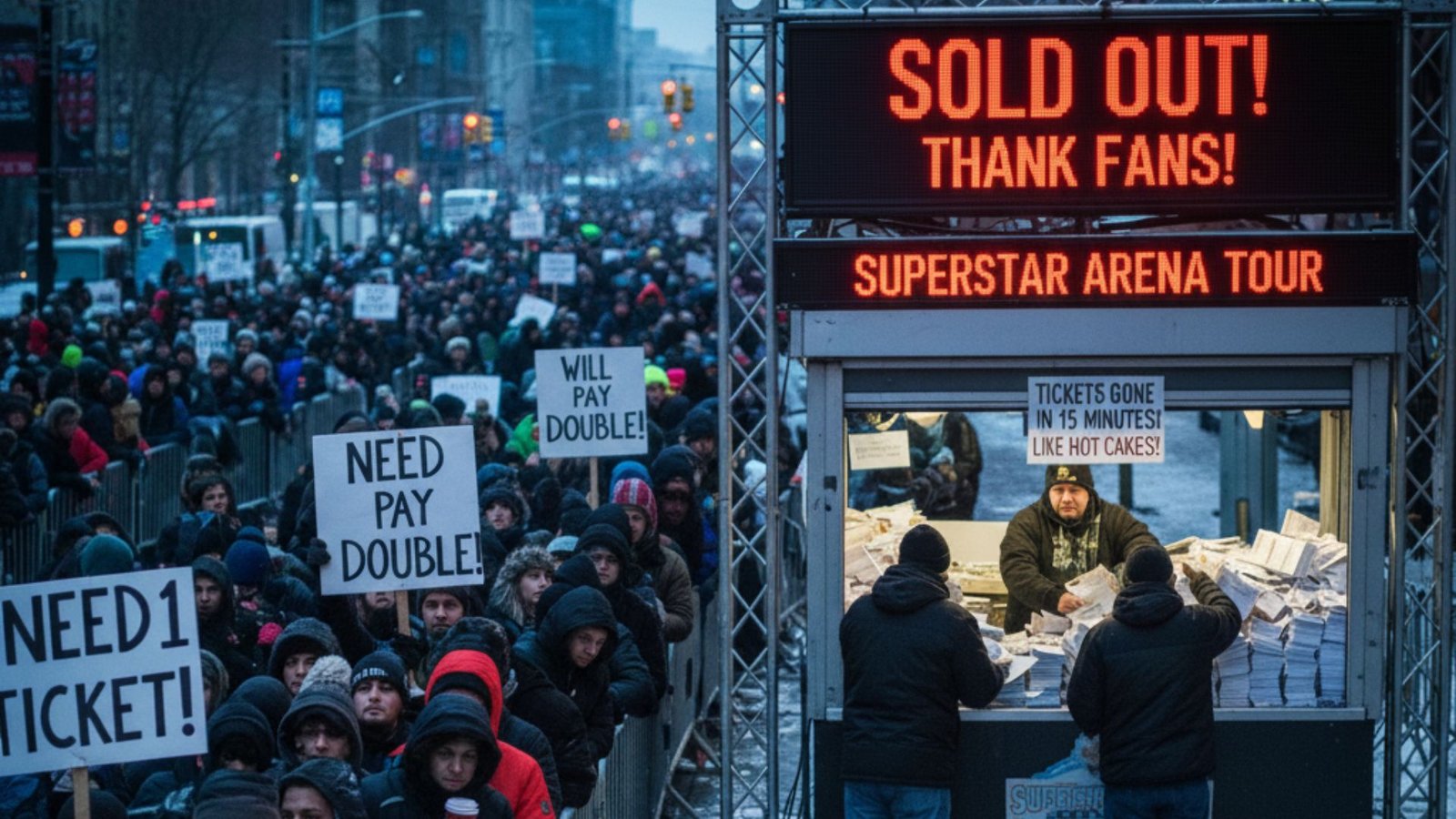
The 2026 FIFA World Cup is shaping up to be a historic event in multiple ways. Just 15 days into ticket sales in December 2025, FIFA received an astounding 150 million ticket requests for only 6-7 million available tickets—representing unprecedented demand that exceeds the entire ticket sales of all 22 World Cups combined. This extraordinary response from football fans across over 200 countries has positioned the 2026 tournament as the most sought-after World Cup in history. The challenge facing FIFA is not merely about selling tickets, but managing one of the largest logistical and technological undertakings ever attempted by a sporting organisation. This article examines the monumental scale of demand, how FIFA’s ticketing infrastructure operates under such pressure, the mechanisms protecting fans from fraud, and what this record-breaking interest reveals about the future of global football tournaments.
Why World Cup Ticket Demand Has Reached Record Levels
The 150 million ticket requests in just two weeks represent a confluence of several unprecedented factors in global football. The primary driver is the expansion of the tournament itself. For the first time in World Cup history, the format has been enlarged from 32 teams to 48 teams, with the number of matches increasing from 64 to 104. This significant expansion creates more ticket inventory than ever before, with FIFA projecting that over 5.5 million tickets could be sold—surpassing the previous record of 3.4 million tickets sold in Qatar 2022.
Another critical factor is the geographic accessibility of the 2026 tournament. The World Cup will be hosted across three nations—the United States, Canada, and Mexico—spanning 16 cities with world-class infrastructure already in place. This tri-nation hosting model fundamentally changes the accessibility equation for fans. For North American supporters, attending multiple matches is now realistic without international travel, while for international fans, travel to North America from traditional football strongholds like Europe is well-established and relatively accessible compared to previous tournaments in distant regions.
The global reach of digital ticketing has exponentially increased potential buyers. FIFA’s online platform opens ticket sales to fans across all 200-plus countries simultaneously, eliminating geographical barriers that previously limited demand. Moreover, the tournament follows years of pent-up demand for experiential sporting events, with travel and tourism fully normalised post-pandemic. The combination of expanded tournament size, convenient tri-nation location, digital accessibility, and global travel capacity has created a perfect storm of demand that FIFA frankly never anticipated at this magnitude.
Breaking Down the 150 Million Ticket Requests
Understanding what “150 million requests” actually means is crucial to grasping the true scale of demand versus actual availability. FIFA President Gianni Infantino clarified this figure at the World Sports Summit in Dubai: the tournament had only 6-7 million tickets on sale, yet received 150 million applications in 15 days alone. This translates to approximately 10 million ticket requests per single day—a pace that would theoretically allow fans to fill 300 years of World Cups in just two weeks.
The 150 million figure represents applications submitted during the Random Selection Draw phase, which opened on 11 December 2025 and will conclude on 13 January 2026. This phase is crucial because it sets expectations for subsequent phases: first-come-first-served rounds, hospitality packages, and last-minute sales. Each individual application is counted separately, regardless of whether one person submitted multiple applications for different matches or ticket categories. The verification mechanism behind these numbers provides additional context—FIFA counts only requests backed by verified credit card numbers, ensuring the 150 million figure represents genuine, verified demand rather than bot-generated or fraudulent submissions.
The geographic distribution of requests reveals fascinating patterns about global football enthusiasm. Fans from the United States have submitted the highest number of requests, followed by Germany and the United Kingdom. This distribution reflects both population density and football-watching culture, with the US market particularly activated by the tournament’s location on North American soil. The 150 million requests represent requests for approximately 6-7 million tickets, meaning the tournament is oversubscribed approximately 30 times over. Put differently, for every available ticket, roughly 21-25 fans have requested that same seat—numbers that illustrate the impossible task of satisfying all demand and justify FIFA’s multi-phase, lottery-based approach.

How FIFA’s Ticketing System Works
FIFA has implemented a sophisticated, multi-phase ticketing strategy designed to distribute limited inventory fairly across billions of potential buyers. The system operates through clearly defined phases, each with distinct rules and purchasing mechanisms that prioritise different customer segments and sales strategies.
The Visa Presale Draw, which ran from 10-19 September 2025, was the first phase, exclusively available to Visa cardholders globally. Selected winners received notification starting 29 September 2025, with purchase windows opening in October on a first-come-first-served basis after their selection. This phase allocated 1 million tickets and allowed FIFA to trial its systems at scale while rewarding a premium payment method partner.
The Random Selection Draw phase, currently underway, is the largest public phase. It opened 11 December 2025 and runs until 13 January 2026. During this phase, applications are submitted continuously, but submission timing offers no advantage. Whether a fan applies on 11 December or 12 January makes absolutely no difference to their selection odds—all applications are processed together through an algorithmic random draw. Applicants can request tickets for specific matches or choose general categories. After the final team-draw results are announced on 5 December (determining which nations play which opponents in which cities), a third random lottery will occur, allowing fans to specify exact matchups they want.
FIFA’s verification system includes multiple safeguards against fraud and bot manipulation. After the application period closes, FIFA conducts a comprehensive “data scrub” process using advanced technology to identify and eliminate invalid entries, bot submissions, and duplicate applications. Staff manually review entries from identical addresses to identify collusion or multiple applications from single individuals attempting to circumvent purchasing limits. Information such as credit card details, names, and contact information undergoes algorithmic analysis to flag suspicious patterns.
The payment confirmation process ensures legitimate demand: only applications with verified credit card numbers that successfully pass fraud detection are counted toward the official demand figures. This explains why the 150 million figure carries such significance—these are not speculative requests, but verified applications backed by actual payment-method validation.
Technology Behind Handling Massive Ticket Demand
FIFA has deployed enterprise-grade cloud infrastructure and sophisticated queue-management technology to handle 10 million requests daily without system collapse. The ticketing platform operates on cloud-based architecture designed to scale elastically with demand, automatically provisioning additional computing resources during traffic surges. This infrastructure must simultaneously process applications, conduct fraud detection, manage database transactions, and maintain system security.
Anti-bot protection systems are foundational to FIFA’s defence strategy. Threat research has revealed that cybercriminals are preparing botnets specifically designed to flood FIFA’s ticketing queues, acquire inventory at scale through automation, and resell at inflated prices. In response, FIFA has implemented behavioural analysis algorithms that distinguish between human users and automated traffic by examining click patterns, navigation flows, and timing behaviours that reveal machine scripts. The platform uses CAPTCHA challenges and device fingerprinting technology to identify suspicious access patterns, with real-time signature creation capabilities to block emerging threats.
Fraud detection algorithms operate continuously during each application phase. These systems analyse submitted applications across multiple data dimensions—payment card networks, geographic patterns, IP addresses, device identifiers—to flag high-risk submissions before they enter the official lottery pool. FIFA’s partnership with payment processors enables cross-verification of card details against known fraud databases and suspicious transaction patterns.
Fair-access systems ensure equitable distribution despite overwhelming demand. The random selection methodology prevents timing-based advantages; servers receive all applications throughout the application window identically, with no priority given to early submissions. This removes the advantage that speed-advantage could provide and prevents server crashes from fans refreshing pages frantically. Multiple purchasing windows across different phases ensure that failure in one phase does not permanently exclude fans from future opportunities.
Battle of Galwan: Heroes of Courage and Sacrifice – India’s Greatest Military Stand Against China
What Happens When Fans Don’t Get Tickets?
With 30-times oversubscription, the harsh reality is that the vast majority of applicants during the Random Selection Draw phase will not secure tickets. FIFA has created multiple secondary pathways to address this inevitable outcome and manage fan disappointment.
Official Resale Platform: FIFA has established its own regulated resale platform accessible at FIFA.com/tickets. This platform protects buyers from counterfeit tickets while allowing original purchasers who cannot attend to sell tickets legitimately. However, FIFA charges fees on both sides—15% from sellers and 15% from buyers—substantially reducing the flexibility of resale as an alternative. For example, a ticket originally purchased for $1,000 would result in the seller receiving only $850 after FIFA’s fee, whilst the buyer would pay $1,150 including FIFA’s buyer fee.
Hospitality Packages: FIFA offers premium all-inclusive experiences through official hospitality partner On Location, which bypasses the lottery entirely but at significantly premium pricing. These packages include match tickets, hotels, transport, and meals, eliminating uncertainty for fans willing to pay substantially above face value.
Additional Sales Phases: The tournament schedule includes multiple additional phases beyond the current Random Draw. A third lottery phase following the final team draw will allow match-specific selections. Subsequently, a last-minute sales phase in spring 2026 will release remaining inventory on a first-come-first-served basis, allowing fans who missed earlier phases to potentially secure tickets closer to the tournament.
Travel Packages: Airlines and tourism operators offer all-inclusive packages including flight, accommodation, and match tickets. Qatar Airways and other carriers have developed World Cup packages, providing alternative pathways for fans unable to secure tickets through standard channels.
Lessons FIFA Learns From Record-Breaking Demand
The 150 million ticket requests deliver critical insights for tournament management and illuminate tensions between accessibility, revenue maximisation, and fairness. First, demand data demonstrates that FIFA’s expanded 48-team format has successfully amplified global engagement. The fact that requests exceed historical totals by multiples of thousands confirms that expansion achieved its goal of broadening the tournament’s appeal.
Second, the ticketing record has exposed infrastructure gaps. Fan group criticism regarding ticket pricing (ranging from $120 for group-stage matches to $8,680 for the championship final) prompted FIFA to introduce a $60 supporter tier. However, this concession is limited—only 10% of each national association’s allocation, meaning fewer than 2% of total tickets will be priced affordably. The demand surge has forced FIFA to acknowledge that whilst revenue maximisation justifies premium pricing for most inventory, some affordability tier is necessary for legitimacy and inclusivity.
Third, the demand surge has highlighted the need for improved communication and transparency. Fan frustration about pricing, application confusion, and clarity regarding ticket allocation rules across multiple phases revealed that whilst FIFA’s technical systems are sophisticated, its communication regarding process and fairness could be substantially clearer.
Fourth, the overwhelming demand validates FIFA’s lottery-based rather than first-come-first-served approach. With 150 million requests in 15 days, a first-come-first-served system would have sold the entire 6-7 million ticket allocation within hours, creating unfair geographic advantages for fans with faster internet speeds and available time. The lottery approach democratises access by eliminating timing advantages.
Queue of football fans hi-res stock photography and images
What This Means for the Future of World Cup Tickets
The 2026 record-breaking demand establishes a new baseline for future tournaments and will fundamentally reshape FIFA’s planning assumptions. Tournament organisers will anticipate that demand will continue expanding, requiring capacity planning that accounts for 30-times oversubscription as a realistic scenario rather than an outlier.
Stadium capacity expansion becomes increasingly relevant. Whilst the 2026 tournament benefits from North America’s existing large stadiums (averaging over 60,000 capacity compared to Qatar’s 47,000 average), future hosts may need to construct expanded facilities to accommodate increased attendance expectations. The data suggests that future World Cups should plan infrastructure assuming demand will exceed supply by 15-30x, requiring either significantly expanded stadium capacity or further restricted ticket allocation per fan.
Digital-first ticketing evolution is now inevitable. The 2026 model has proven that cloud-based, globally accessible ticketing platforms can process unprecedented demand volumes. Future tournaments will likely implement even more sophisticated digital systems, potentially incorporating blockchain technology for ticket authentication and security, reducing counterfeit ticket risks whilst enabling seamless secondary market transactions.
Fan experience refinement will receive increased focus. Recognising the frustration created by demand-supply gaps, future tournaments may implement earlier notification of allocation procedures, more transparent communication about odds, and expanded hospitality options at mid-range price points to capture fans unable to secure standard tickets but unwilling to pay premium hospitality prices.
Conclusion
The 150 million ticket requests for 2026 World Cup represent far more than a statistical curiosity—they represent a watershed moment in sports event management. FIFA’s achievement in processing, verifying, and fairly allocating tickets amidst such overwhelming demand demonstrates sophisticated technological capability and operational planning. Yet the demand surge has also exposed legitimate concerns about affordability, accessibility, and equity in modern sporting events. As FIFA navigates the remaining ticket phases and prepares for tournament delivery, the lessons from this unprecedented demand will reshape how major tournaments approach ticketing, pricing, and fan experience globally. The overwhelming response confirms what football fans already knew: the World Cup remains the planet’s most uniting sporting spectacle, and no ticketing system can ever fully satisfy the world’s passion for the beautiful game.

Asif Ali is an entertainment content creator and movie enthusiast at Movie Trend. I covers the latest movie news, OTT updates, and trending entertainment stories with a focus on accuracy, originality, and reader value.