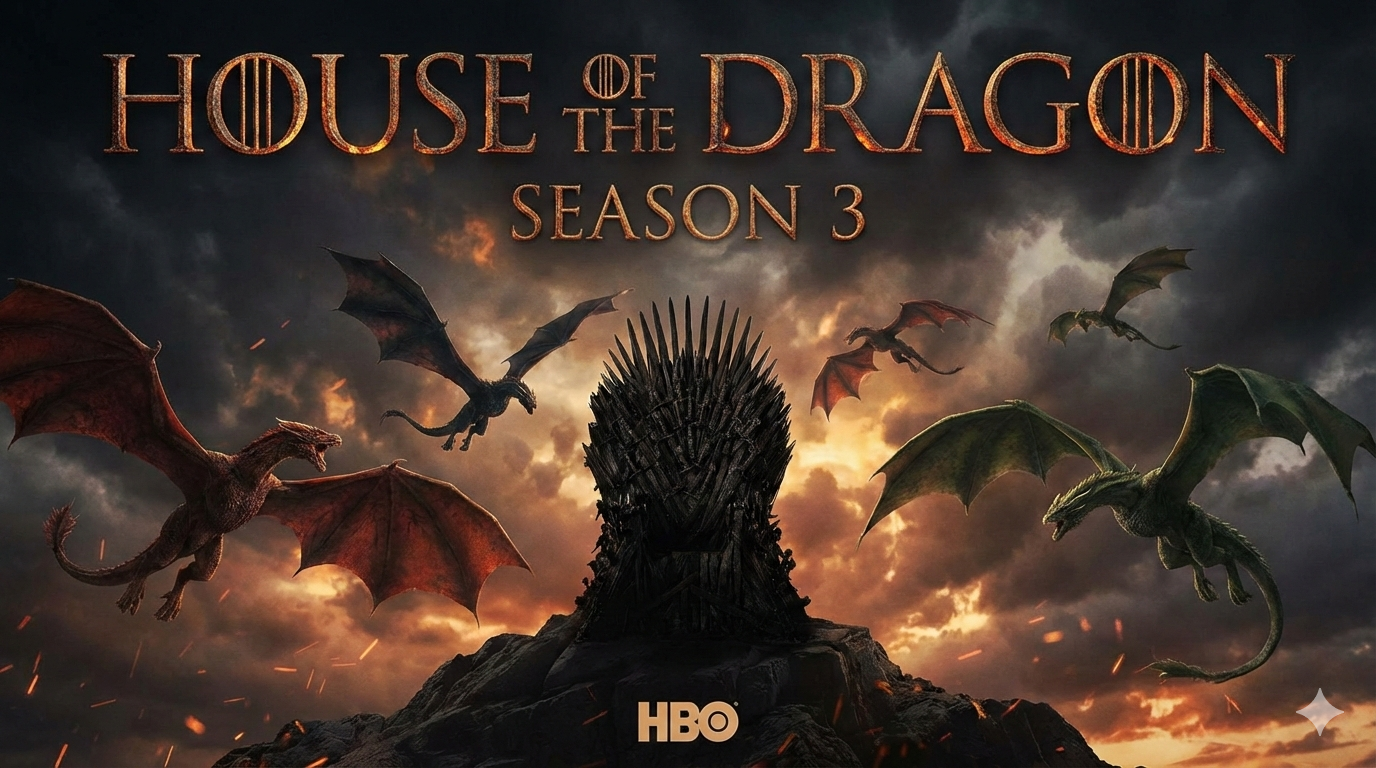
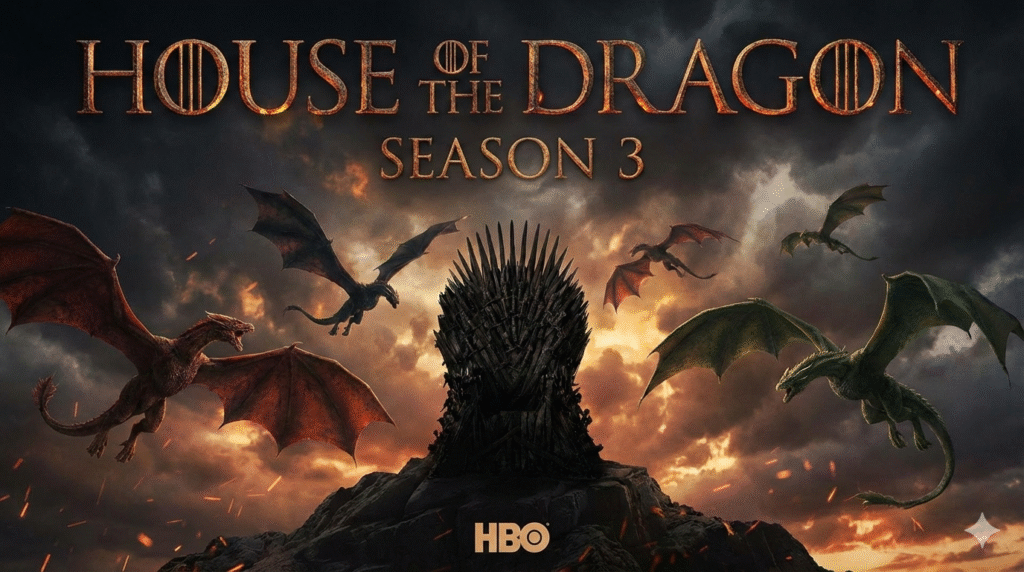
The Dance of Dragons is about to reach its most explosive phase. After a build-up in Season 2 that left fans clamouring for more action, House of the Dragon Season 3 is set to deliver what showrunner Ryan Condal promises will be a season where “the war goes very hot, very, very quickly.” Scheduled for a mid-2026 release on HBO and streaming on JioHotstar in India, the upcoming season will introduce pivotal new characters whose arrival could completely reshape the civil war tearing House Targaryen apart.
Season 2 of the fantasy epic, which aired in 2024, received mixed reactions from viewers and critics alike. Whilst the character development and political intrigue were praised, many felt the pace was slower than expected, with fewer large-scale battles compared to the first season. The show’s decision to cut the season from 10 to 8 episodes also meant that several anticipated events, including the massive Battle of the Gullet, were pushed to Season 3.
Now, with filming wrapped in October 2025 and the series currently in post-production, HBO executives and the cast have begun teasing what’s to come. The third season promises to be markedly different from its predecessor, with showrunner Ryan Condal confirming there will be “four major events” adapted from George R.R. Martin’s source material, Fire & Blood. The shift in tone and pace will be driven largely by the introduction of new players on the battlefield—particularly Ormund Hightower and Daeron Targaryen, whose presence will dramatically alter the balance of power between the Greens and the Blacks.
Why New and Returning Characters Matter
Image 2: [Split screen showing the Green and Black faction banners with dragon symbols]
The Dance of Dragons has, until now, been a relatively contained conflict centred around King’s Landing and a handful of key locations. Whilst both factions have dragons and armies, the war has largely been one of positioning, strategy, and small skirmishes. Season 2 ended with multiple forces on the move: Daemon Targaryen securing the Riverlands, the Velaryon fleet maintaining a blockade at the Gullet, and various armies marching towards inevitable confrontation.
What makes Season 3 fundamentally different is the scale of warfare and the number of active combatants entering the field simultaneously. Fresh faces bring new dragons, new armies, and crucially, new dynamics to both the battlefield and the political landscape. Characters who have been mentioned but never seen will finally take centre stage, and their actions will trigger a cascade of events that propel the story towards its tragic conclusion.
According to information from the series production, Season 3 will feature some of the most complex battle sequences ever attempted for television. HBO programming executive Francesca Orsi visited the set and described what she saw as “massive,” noting that the production needed extra time to properly execute the ambitious vision for the season’s major battles. The Battle of the Gullet alone, which Condal described as “the most complex sequence that’s ever been done for television,” will serve as an early showcase of the season’s escalated intensity.
Ormund Hightower: The Strategic Power Behind the Greens
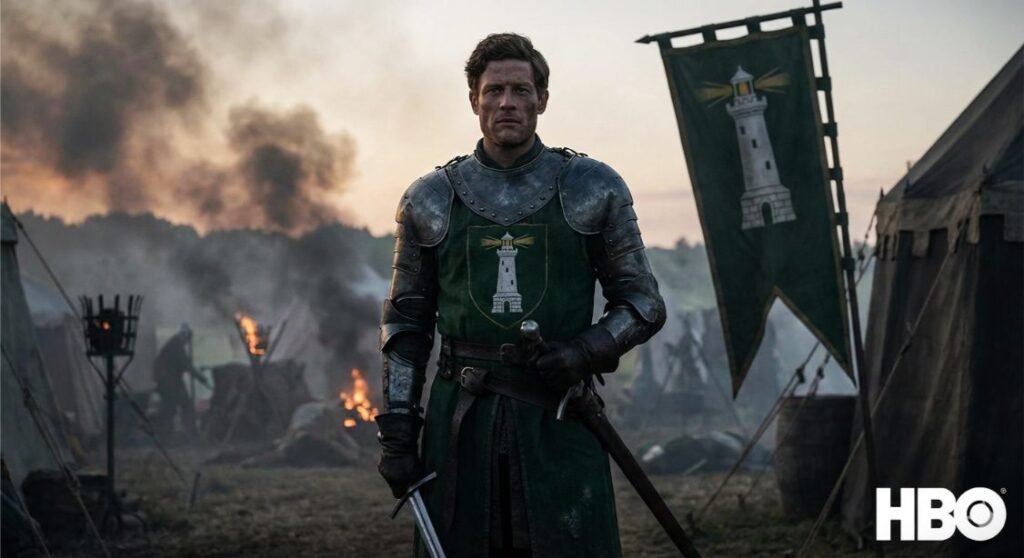
One of the most significant additions to House of the Dragon Season 3 is Ormund Hightower, portrayed by British actor James Norton. Known for his roles in Happy Valley, Grantchester, and McMafia, Norton brings gravitas to a character showrunner Ryan Condal has described as “the biggest new role” in the series since Season 1.
Who is Ormund Hightower?
Ormund Hightower is the Lord of Oldtown and the head of House Hightower during the Dance of Dragons. He is the nephew of Otto Hightower, making him the cousin of Alicent Hightower and Gwayne Hightower. After the death of his father, Lord Hobert Hightower (who appeared briefly in Season 1), Ormund inherited not only the lordship of one of Westeros’s most powerful houses but also the responsibility of leading their forces in support of King Aegon II.
Oldtown is the second-largest and arguably the wealthiest city in the Seven Kingdoms, home to the Citadel (where maesters are trained) and the Starry Sept (the centre of the Faith of the Seven). The Hightower family’s influence extends far beyond military might—they represent economic power, religious authority, and scholarly prestige. In Season 2, Otto Hightower mentioned that his nephew was “mustering his forces to march out from Oldtown,” setting up Ormund’s imminent arrival in the conflict.
Military and Political Influence
Ormund commands a substantial host that includes thousands of knights, archers, and men-at-arms from the Reach. In Fire & Blood, his army is described as one of the largest fielded during the Dance of Dragons. However, the Reach is not unified in its support of the Greens. Houses such as Beesbury, Tarly, Rowan, and Caswell have declared for Rhaenyra, creating internal conflict within the region.
This divided loyalty means that Ormund’s march towards King’s Landing will not be straightforward. According to the source material, his forces will face harassment and ambushes from rival Reach houses, forcing him into several confrontations before he can reinforce the Green cause. Showrunner Ryan Condal emphasised that Ormund represents “the voice of the south,” suggesting his character will serve as a key perspective for events unfolding in that region.
Ormund wields Vigilance, a Valyrian steel sword and treasured heirloom of House Hightower. This detail, whilst seemingly minor, carries symbolic weight—Valyrian steel weapons are exceedingly rare and denote both prestige and martial prowess. His possession of such a weapon underscores his importance as a military commander and leader of one of Westeros’s great houses.
Impact on Alliances
Ormund’s arrival strengthens the Green faction at a critical juncture. With Ser Criston Cole leading forces in the Riverlands and Prince Aemond serving as Prince Regent in King’s Landing, the addition of Ormund’s southern army provides much-needed reinforcement. His military experience and resources give the Greens a fighting chance in what has become an increasingly desperate situation.
Beyond pure military strength, Ormund’s political connections matter significantly. His familial ties to the royal family through Alicent create a unified command structure for the Green faction. His relationship with his ward, Daeron Targaryen (Alicent’s youngest son), also plays a crucial role in shaping the young prince’s character and loyalties.
Why Ormund Could Change the War’s Direction
What makes Ormund Hightower a potential game-changer is not just the size of his army but his tactical leadership. Unlike some of the more impulsive characters driving the conflict, Ormund represents measured, strategic thinking. His experience as Lord of Oldtown has given him administrative and diplomatic skills that will prove valuable as the war intensifies.
However, readers of Fire & Blood know that Ormund’s journey will not be without significant challenges and consequences. His leadership will be tested in multiple engagements, and his fate will have profound implications for the Green cause. The series has already begun setting up these conflicts, with Season 2 establishing the divided loyalties within the Reach that will complicate his campaign.
Frieren Season 2 Might Change the Entire Tone of the Series
Why WNBA Stars Are Entering Hollywood: Angel Reese & A’ja Wilson’s Big Moves Explained
Daeron Targaryen: The Missing Dragon Returns
Perhaps no character in House of the Dragon has generated more anticipation than Prince Daeron Targaryen. Alicent and King Viserys’s youngest son has been conspicuously absent from the screen for two seasons, mentioned only in passing dialogue. Season 2’s finale finally gave viewers a glimpse of his dragon, Tessarion—a stunning cobalt-coloured she-dragon—but Daeron himself remains to be officially introduced. Showrunner Ryan Condal has confirmed that “Daeron’s in the story” for Season 3 and will be “a big feature,” though the actor playing him has yet to be announced (though rumours suggest Charlie Gordon may have been cast).
Introduction to Daeron Targaryen
Unlike his older brothers Aegon II and Aemond, Daeron was sent to Oldtown as a young boy to serve as a ward and squire to his cousin Ormund Hightower. This separation from his immediate family has shaped his character fundamentally. Whilst Aegon grew into a hedonistic and irresponsible king, and Aemond became ruthless and vengeful, Daeron developed into what Otto Hightower describes (in a Season 2 conversation with Alicent) as humble, kind-hearted, and well-liked.
In Fire & Blood, Daeron is repeatedly characterised as the most decent of Alicent’s sons—loyal to his family but not cruel, brave but not reckless. His years in Oldtown, away from the toxic atmosphere of King’s Landing’s court and the intense pressure of succession politics, allowed him to develop a more balanced temperament. Condal himself noted that “the fact that Daeron has not featured in the world of his family, at least his immediate nuclear family, is sort of the point.”
Dragonpower and Warfare
Daeron’s dragon, Tessarion, whilst smaller than ancient beasts like Vhagar or Vermithor, is still a formidable force. In dragon warfare, numbers matter significantly. Each additional dragon shifts the tactical balance, providing aerial superiority, psychological impact, and devastating firepower. With Rhaenyra’s faction having recruited several dragonseeds (common-born dragonriders) by the end of Season 2, Daeron’s entry into the conflict helps equalise the dragon count for the Greens.
According to Fire & Blood, Daeron makes his mark almost immediately upon entering the war. His first major action comes during the Battle of the Honeywine, where his intervention with Tessarion turns what appeared to be certain defeat for Ormund’s army into a decisive Green victory. This moment will likely serve as his introduction in Season 3, establishing him as both a capable dragonrider and a hero figure.
The visual of Tessarion—with her distinctive blue colouring—has already captured fan imagination from the brief glimpse in Season 2’s finale. Season 3 will showcase the dragon in full battle sequences, adding another spectacular element to the show’s already impressive dragon effects.
Personality and Loyalty
What makes Daeron particularly interesting from a storytelling perspective is how he contrasts with his brothers whilst remaining loyal to the Green cause. House of the Dragon has generally portrayed Rhaenyra’s Black faction as more sympathetic, with the Greens often appearing power-hungry or cruel. Daeron complicates this moral landscape.
He fights for his family not out of ambition or malice but out of genuine familial loyalty. His presence humanises the Green faction and forces viewers to reconsider simplified notions of who represents the “right” side in this civil war. Several sources suggest that Daeron’s character arc and eventual fate in the series will be among the most emotionally impactful moments of the Dance of Dragons.
Otto Hightower’s assessment of Daeron in Season 2 as a potential protégé suggests the young prince possesses qualities that his grandfather valued—strategic thinking, charisma, and the ability to inspire loyalty. Unlike Aemond’s fear-based approach or Aegon’s disinterested rule, Daeron could represent a different kind of Targaryen leadership, one built on honour and respect.
Daeron’s Role in Key Battles
Beyond the Battle of the Honeywine, Fire & Blood details Daeron’s involvement in several other crucial engagements. His presence will be felt throughout the season as the war escalates. The show has confirmed that Season 3 will feature at least four major battles or events from the book, and Daeron will play a significant role in multiple confrontations.
One particularly important aspect of Daeron’s story involves his relationship with Ormund Hightower. The bond between guardian and ward will be tested as war’s horrors unfold. Their dynamic—experienced commander and eager young prince—provides opportunities for compelling character development and dramatic tension.
How New Characters Reshape Alliances
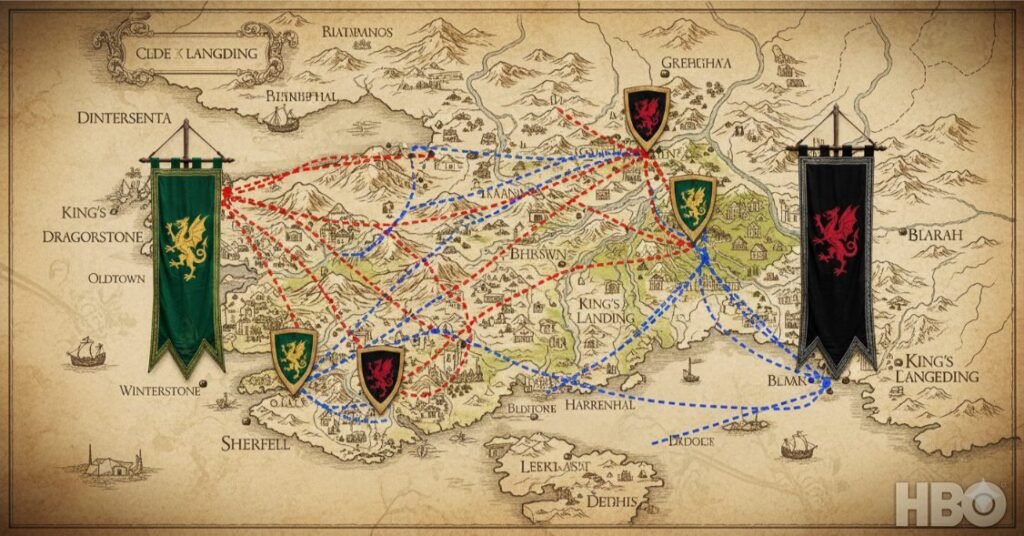
The introduction of Ormund and Daeron fundamentally alters the political and military landscape of the Dance of Dragons. Their arrival doesn’t simply add numbers to the Green forces—it creates new relationship dynamics, revives old tensions, and forces other characters to react and adapt.
With Ormund commanding the Hightower host and Daeron bringing dragonfire, the Greens gain a significant southern presence that had been largely absent in earlier stages of the war. This forces Rhaenyra and her advisors to divide their attention and resources. No longer can they focus solely on King’s Landing and the Riverlands; the Reach becomes another active theatre of war.
The strengthening of the Green position in the south also impacts houses that had declared for Rhaenyra. Lords who might have wavered or hedged their bets now face direct military pressure. The cost of supporting the Black cause increases dramatically when a Hightower army backed by dragonfire is marching through their lands.
Conversely, the Blacks will respond to these developments by escalating their own military operations. The domino effect of new leadership entering the conflict accelerates the pace of the war. According to showrunner Condal, viewers who felt Season 2 was too slow will find Season 3 delivers action “in copious amounts.”
The formation of unexpected partnerships also becomes possible. War creates strange bedfellows, and the introduction of new players means new opportunities for betrayal, shifting loyalties, and alliances formed out of desperation rather than principle. Fire & Blood details several such developments that may feature in Season 3.
Changing War Outcomes: What’s at Stake
Image 6: [Battle scene concept art showing dragons and naval warfare]
The strategic implications of Ormund’s generalship and Daeron’s dragonpower extend far beyond individual battles. Their combined influence could alter the entire trajectory of the civil war and reshape Westeros’s political landscape for generations.
From a military perspective, Ormund provides the Greens with something they’ve lacked—coordinated leadership of a major army. Whilst Ser Criston Cole is a skilled fighter, his limitations as a grand strategist have been evident. Ormund brings the experience of actually governing a major city and managing complex logistics. His ability to hold together a coalition of Reach houses (even if incomplete) demonstrates political acumen that the Green faction desperately needs.
Daeron’s dragonfire adds a dimension of tactical flexibility. Dragons in House of the Dragon aren’t just powerful weapons—they’re game-changers that can turn the tide of battle in moments. The presence of an additional dragon means the Greens can contest aerial supremacy, protect their armies from enemy dragonriders, and strike at targets previously considered safe.
The political consequences extend beyond immediate military victories or defeats. The success or failure of Ormund’s campaign affects the loyalty of other houses. A string of Green victories could convince fence-sitters to declare for Aegon II, whilst defeats might encourage defections. The war’s momentum can shift dramatically based on which faction appears to be winning at any given moment.
Long-term effects on Westeros’s power structure are also at stake. The Dance of Dragons is ultimately a war of succession that will determine not just who sits the Iron Throne but what precedents are set for future conflicts. Every major battle, every alliance formed or broken, contributes to the political culture that will define the realm for decades to come.
HBO’s investment in making Season 3’s battle sequences as spectacular as possible suggests they understand the importance of these moments. The Battle of the Gullet, described by producers as requiring expertise from the team behind Titanic to properly execute, will showcase naval warfare on a scale never before attempted in the Game of Thrones franchise. Subsequent battles featuring Ormund and Daeron will need to match or exceed that standard.
Fan Expectations and Theories
Image 7: [Fan art montage of Ormund Hightower and Daeron Targaryen]
The House of the Dragon fandom has spent months speculating about how Season 3 will adapt events from Fire & Blood. Readers of George R.R. Martin’s book have clear expectations based on the source material, whilst show-only viewers are theorising based on clues dropped in Season 2 and promotional materials released so far.
Regarding Ormund Hightower, fan theories largely centre on how faithfully the show will adapt his military campaigns. Some speculate that the series might combine multiple battles from the book into a single, larger engagement for production efficiency. Others wonder whether Ormund’s character will be expanded beyond his relatively limited role in Fire & Blood, given that showrunner Condal has emphasised his importance.
The relationship between Ormund and Daeron has generated particular interest. Fans theorise that the show will explore their guardian-ward dynamic more deeply than the book, which mentions it only briefly. The potential for this relationship to humanise both characters and add emotional weight to future events has been a popular topic of discussion in online forums and social media.
Daeron himself is the subject of intense speculation. Which actor will portray him? How will the show depict his personality—will he match the book’s description of him as noble and kind, or will House of the Dragon add moral complexity? How much screen time will Tessarion receive, and how will the dragon’s unique colouring be utilised in battle sequences?
Some fans predict that Daeron could become a breakout character in Season 3, similar to how Aemond captured audience attention in Season 1. His combination of youth, dragonriding prowess, and reportedly decent character makes him potentially very appealing to viewers tired of watching morally compromised characters make increasingly terrible decisions.
Predictions about who gains the upper hand vary. Book readers know the broad strokes of how events unfold, but House of the Dragon has made enough changes that even they can’t be certain of specific outcomes. The show has already altered timelines, combined characters, and modified motivations from Fire & Blood. Season 3 could continue this trend, making certain battles more or less decisive than in the source material.
One popular theory suggests that Ormund and Daeron’s success in the south might initially give the Greens a significant advantage, only for subsequent betrayals and defeats to undermine those gains. This would fit with the tragic trajectory of the Dance of Dragons, where neither side truly “wins” and both are devastated by war’s end.
The endgame has become a topic of heated debate. With HBO confirming that House of the Dragon will conclude with Season 4, fans are calculating how much story remains to be told and which events will fall into which season. Ormund and Daeron’s arcs will need to be fully explored over the next two seasons, and their eventual fates will significantly impact how the remaining story unfolds.
Conclusion: A Turning Point in the Story
Image 8: [The Iron Throne with dragon shadows overhead]
House of the Dragon Season 3 represents a critical evolution for the series. After Season 2’s deliberate pacing and focus on political manoeuvring, the upcoming season promises to deliver the epic warfare and dragon battles that fans have been anticipating. The introduction of Ormund Hightower and Daeron Targaryen is not merely about adding new characters—it’s about fundamentally transforming the scope and stakes of the Dance of Dragons.
These two figures bring different but complementary strengths to the Green cause. Ormund provides military leadership, strategic thinking, and the economic might of Oldtown. Daeron brings youth, idealism, dragonfire, and a moral complexity that challenges viewers’ perceptions of the conflict. Together, they represent the Greens’ best hope of securing victory or, at minimum, survival.
Yet their arrival also accelerates the war’s tragic momentum. Every victory brings new costs, every alliance new betrayals, and every battle brings both sides closer to mutual destruction. The Dance of Dragons is ultimately a story about the price of civil war, the erosion of honour and decency, and the devastating consequences of choosing power over peace.
The importance of character-driven storytelling in epic fantasy cannot be overstated. House of the Dragon succeeds or fails based not on the spectacle of its battles (though those certainly matter) but on whether audiences care about the people fighting them. Ormund and Daeron must be more than military assets on a strategic map—they need to be fully realised characters whose choices, relationships, and fates resonate emotionally.
Early reactions from HBO executives and the production team suggest Season 3 will deliver on both fronts. The battles will be spectacular, with the Battle of the Gullet potentially setting a new standard for television action sequences. But the character work—the relationships, moral dilemmas, and personal tragedies—will provide the emotional foundation that makes those battles meaningful.
For Indian viewers watching on JioHotstar when Season 3 releases in mid-2026, the wait may feel interminable. But if the show delivers on its promise, House of the Dragon Season 3 will mark a turning point not just for the Dance of Dragons but for the Game of Thrones franchise as a whole. The arrival of Ormund Hightower and Daeron Targaryen signals that the war has entered its bloodiest, most desperate phase—and there will be no turning back.
House of the Dragon Season 3 is expected to premiere in Summer 2026 on HBO and stream on JioHotstar in India. The series stars Matt Smith, Emma D’Arcy, Olivia Cooke, and an ensemble cast, with James Norton joining as Ormund Hightower. All previous seasons are currently available for streaming.
Stay tuned for more updates on House of the Dragon Season 3 as official release dates and casting announcements are confirmed.

Asif Ali is an entertainment content creator and movie enthusiast at Movie Trend. I covers the latest movie news, OTT updates, and trending entertainment stories with a focus on accuracy, originality, and reader value.