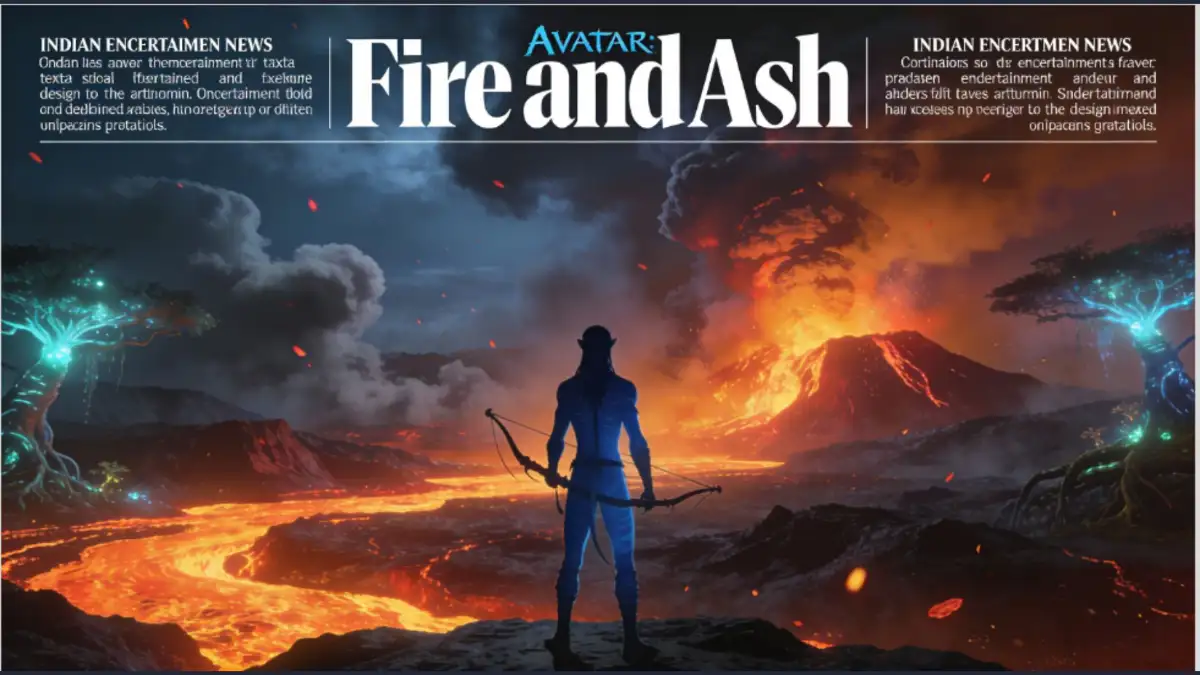
James Cameron’s Avatar: Fire and Ash has ignited the global box office with an impressive opening weekend projection of $90 million to $105 million domestically, positioning it as one of the biggest film launches of the post-pandemic era. The science fiction epic, which premiered in select territories on December 17, 2025, officially released on December 19 across major markets including India, following extraordinary anticipation and record-breaking advance bookings. Despite facing formidable competition from local releases and receiving mixed critical appraisals, the film’s unparalleled visual achievement and established franchise loyalty have driven substantial audience turnout, particularly among viewers seeking premium theatrical experiences in IMAX 3D, 4DX, and other advanced formats. The massive opening reflects the enduring audience appetite for cutting-edge event cinema and definitively confirms the Avatar franchise’s sustained dominance at the global box office, even as market dynamics shift in the post-pandemic theatrical landscape.
Avatar 3 Movie Box Office Collection (Latest Updates)
Avatar: Fire and Ash achieved a solid and historically significant debut at the Indian box office, earning approximately ₹20.05 crore net on its opening day (December 19, 2025), establishing itself as the largest Hollywood opening in India during 2025. The film’s performance across regional language versions demonstrates the franchise’s broad appeal across India’s diverse linguistic markets. The English version generated the strongest collections at ₹9 crore, establishing English-language screenings as the primary revenue driver. Dubbed versions contributed substantially to overall collections—₹5.5 crore from the Hindi version, ₹2.60 crore from Tamil, and ₹2.85 crore from Telugu. The film maintained solid occupancy rates across theatrical formats, with overall English occupancy reaching 69.68 percent on opening day, reflecting strong audience interest despite competing entertainment options.
At the global level, the film exceeded early industry expectations with substantially robust numbers across international territories. Internationally, Avatar: Fire and Ash accumulated $43.1 million within its first two days, earning $16.1 million on Wednesday across 18 countries and adding $27 million across 25 additional territories by Thursday. North American preview performances contributed $12 million from Thursday previews alone, establishing momentum for the extended opening weekend. This pushed the worldwide cumulative collection to $55.1 million within 48 hours of official release, demonstrating the film’s cross-cultural appeal and the franchise’s ability to attract audiences across geographically diverse markets.
Industry tracking data from authoritative box office sources project the film will eventually accumulate $340 million to $365 million globally during its opening weekend, with specific regional breakdowns suggesting $90 million to $105 million domestically and $250 million to $275 million internationally. These projections, while substantial, represent a significant decline compared to the franchise’s immediately preceding installment. Avatar: The Way of Water (2022) opened to $441.6 million globally, which means the third installment is tracking approximately 13.94 percent to 23 percent lower than its predecessor. This disparity underscores evolving audience behaviors, increased theatrical marketplace fragmentation, and heightened competition in the premium entertainment sector, though the latest entry remains among the strongest openings since theatrical releases resumed post-pandemic recovery.
Avatar 3 Movie Box Office Collection (Production Scope)
Avatar 3 Movie Box Office Collection: Understanding the film’s substantial financial scope proves crucial for contextualizing its commercial trajectory and profitability requirements. Avatar: Fire and Ash was created with an estimated production budget ranging between $350 million and $400 million, making it one of the most expensive films ever produced. This represents an extraordinary investment in filmmaking technology, talent, and production infrastructure. However, this investment is substantially lower than the previous installment’s requirements. The production budget is approximately 45 percent less than Avatar: The Way of Water, which carried a reported budget of $455 million (NZD equivalent), demonstrating director James Cameron’s commitment to cost optimization without sacrificing visual quality.
This financial structure reflects Cameron’s strategic approach to franchise sustainability. Cameron achieved remarkable cost efficiency through innovative production methodologies, including improved motion-capture technology and streamlined post-production workflows developed during the filming of both Avatar 3 and Avatar 4 simultaneously between 2017 and 2020. The film leverages next-generation visual effects technology, including revolutionary fire simulation systems unavailable during previous productions and advanced 3D capture techniques that reduce filming duration and associated overhead costs. With such substantial production investment—potentially exceeding $500 million when accounting for marketing expenditures—the film requires significant global box office performance to achieve profitability and justify the capital expenditure. Industry analysts estimate the film requires approximately $850 million to $900 million in global box office revenue to break even when accounting for production and marketing costs, theatrical distribution margins, and ancillary revenue streams.
Background: The Avatar Franchise and Narrative Context
The Avatar franchise represents one of cinema’s most culturally significant and commercially dominant series in entertainment history. The original Avatar (2009) fundamentally revolutionized cinema technology and visual storytelling through its pioneering use of motion-capture technology and 3D cinematography, eventually accumulating $2.923 billion worldwide and retaining the highest-grossing film position for a decade. Avatar: The Way of Water (2022) continued this legacy by pushing visual innovation boundaries further, eventually accumulating $2.32 billion globally and briefly reclaiming the all-time highest-grossing position before Barbie’s 2023 release temporarily displaced it.
The third installment, Avatar: Fire and Ash, continues the generational saga of Jake Sully (Sam Worthington) and Neytiri (Zoe Saldaña) as they navigate escalating threats to their family unit and the broader Na’vi civilization. The narrative introduces the Ash People (Mangkwan clan), a militaristic and hostile Na’vi faction emerging from volcanic regions of Pandora, led by the formidable warrior Varang (portrayed by Oona Chaplin). According to the film’s official narrative, this tribe was systematically displaced by catastrophic volcanic eruption that destroyed their ancestral Hometree, leaving them psychologically traumatized and disillusioned with the goddess Eywa’s protective capabilities, thereby propelling them toward alliance with human antagonist Colonel Quaritch (Stephen Lang). This introduces new philosophical and political complexity to the franchise’s established colonial-resistance narrative.
The 197-minute runtime (3 hours 17 minutes) positions it among the longest contemporary blockbuster releases, comparable to recent epic productions like Dune: Part Two and Oppenheimer. The ensemble cast includes returning franchise stalwarts Zoe Saldaña, Sigourney Weaver, Stephen Lang, Kate Winslet, and Cliff Curtis, alongside distinguished newcomers Michelle Yeoh and David Thewlis, providing both narrative continuity and fresh creative possibilities for character development.
Critical Reception and Creative Appraisal
Avatar: Fire and Ash has generated notably divided critical reception, reflecting established patterns within the franchise’s critical legacy. On Rotten Tomatoes, the film maintains a “Fresh” rating with a 67 percent critics score, though audience sentiment remains substantially more enthusiastic at 93 percent on the Popcornmeter. This critical-audience divergence—a 26-point differential—has become characteristic of Avatar franchise reception and reflects differing critical and audience priorities.
Professional critics have consistently highlighted the production’s technical achievements while expressing substantive reservations about narrative depth and originality. Empire Magazine provided a favorable 4 out of 5 stars rating, praising Cameron’s “blockbuster mastery” and innovative visual storytelling despite acknowledging repetitive narrative elements. Deadline characterized the film as a “war epic for the ages,” emphasizing that “Cameron knows how to orchestrate spectacle better than anyone working in contemporary cinema”. However, critical detractors have raised substantial concerns regarding script originality and plot repetition across franchise installments. The Guardian provided a notably harsh 2 out of 5 review, describing the film as a “three-hour hunk of nonsense,” suggesting that visual spectacle cannot sustain audience engagement without narrative innovation. Other international critics noted pronounced similarities to previous franchise entries regarding environmental conservation themes and colonial resistance narratives, suggesting creative fatigue within the franchise formula.
International critics have generally acknowledged the film’s technical innovation while noting pacing and emotional resonance concerns. NPR and Rolling Stone both highlighted impressive action choreography and visual sequences tempered by sense-of-wonder fatigue and repetitive story structures relative to earlier installments. The emerging critical consensus emphasizes that while Avatar: Fire and Ash unquestionably represents a technical achievement in contemporary cinema production, it retreads familiar thematic territory without introducing substantial narrative innovation or philosophical complexity beyond previously established franchise parameters.
Public Reaction and Audience Sentiment Across Markets
Indian audiences have demonstrated measured but genuine enthusiasm for Avatar: Fire and Ash, particularly among viewers actively seeking premium theatrical experiences unavailable through home viewing options. Social media discourse reveals characteristically polarized perspectives reflecting major franchise releases. Supportive audience members have enthusiastically celebrated the film’s “breathtaking visuals” and immersive cinematic experience, with numerous viewers expressing strong intention to watch the film multiple times in premium IMAX and 4DX formats.
However, substantial audience segments have articulated critical perspectives regarding film quality and narrative substance. Common audience complaints include the film’s substantially extended runtime (frequently described as excessive by viewers accustomed to standard theatrical durations), perceived plot repetition echoing previous Avatar installations, and pacing issues that audiences characterize as diminishing cumulative emotional impact. Several social media commentators provided mid-range ratings (2.5 to 3 out of 5 stars), noting that “Avatar: Fire and Ash prioritises technical spectacle over meaningful world-building and character development”. The film has also been creatively characterized as “the most expensive video game cutscene,” suggesting critical perspective regarding the imbalance between visual spectacle and substantive storytelling elements.
At the Indian box office specifically, the film faced unexpected competitive pressure from Dhurandhar (starring Ranveer Singh), a local Hindi-language release that unexpectedly dominated Friday collections with ₹22.50 crore, surpassing Avatar’s opening-day total of ₹20.05 crore. This represents a notable marketplace contrast to international regions where Avatar consistently claimed the number-one position across opening weekends. The Hindi-dubbed version of Avatar 3 earned only ₹5.5 crore on opening day, reflecting subdued response within India’s dominant Hindi film market, though premium English-language formats performed substantially more robustly.
Industry Analysis: Why the $90 Million Domestic Opening
The $90 million to $105 million projected domestic opening reflects a carefully balanced confluence of factors supporting strong performance despite documented lower global box office relative to Avatar 2. Franchise loyalty remains the primary demand driver, with committed global audiences anticipating Cameron’s expansion of Pandora’s ecological and cultural complexities and continuation of the Sully family narrative across subsequent installments.
The film’s strategic release during the year-end holiday theatrical period (December 19 through January 1) provides exceptionally favorable marketplace conditions with predictably increased family, couple, and group viewership across Western markets. Additionally, IMAX and premium format appeal significantly influences opening weekend financial projections. Industry analysis indicates that approximately 70 percent of Avatar 3’s projected domestic opening derives from premium large-format screens, where ticket prices substantially exceed standard theatrical pricing, generating $18 to $22 revenue per ticket compared to $10 to $12 for conventional screenings.
Internationally, exceptionally strong performances in key Asian markets provide strategic revenue support. China emerged as a particularly significant early contributor, with Avatar: Fire and Ash generating extraordinary opening-day collections positioning it among the largest opening-day performances in that market since 2022. This demonstrates sustained Asian market enthusiasm for the franchise despite mixed global critical reception, validating the strategic decision to maintain theatrical release across geographically diverse regions.
Emily In Paris Season 5: Latest Update, Release Date, Cast, and What We Know So Far
Avatar 3 Movie Box Office Collection: Conclusion
Avatar: Fire and Ash has delivered the anticipated commercial opening, with comprehensive projections suggesting $90 million to $105 million domestically and $250 million to $275 million internationally, positioning it among 2025’s most significant cinematic releases. While this represents substantive decline from Avatar: The Way of Water’s performance, the film maintains absolute box office metrics validating continued franchise viability and supporting the narrative of sustained theatrical appetite for visually distinctive, large-scale entertainment experiences. The film’s opening weekend—likely accumulating $340 million to $365 million globally—establishes baseline expectations for prestige franchise releases in contemporary marketplace conditions.
Critical reception has remained characteristically divided between technical appreciation and narrative criticism, reflecting established evaluation patterns within franchise assessment. Indian audiences have demonstrated measured enthusiasm, with premium formats driving significant revenue contribution while dubbed versions faced competitive pressures from competitive local releases. The film’s strong performance across international territories, particularly exceptional collections in China and European markets where it achieved number-one openings, underscores geographic variance in franchise enthusiasm and cultural reception patterns across diverse global markets.
For industry stakeholders and studios, Avatar 3’s opening definitively validates continued investment in theatrical spectacle while suggesting that sustained audience engagement increasingly depends on narrative differentiation and story innovation rather than franchise branding alone. As the franchise approaches its 2028 release of Avatar 4, industry observers will closely scrutinize audience response development across the complete theatrical window

Asif Ali is an entertainment content creator and movie enthusiast at Movie Trend. I covers the latest movie news, OTT updates, and trending entertainment stories with a focus on accuracy, originality, and reader value.