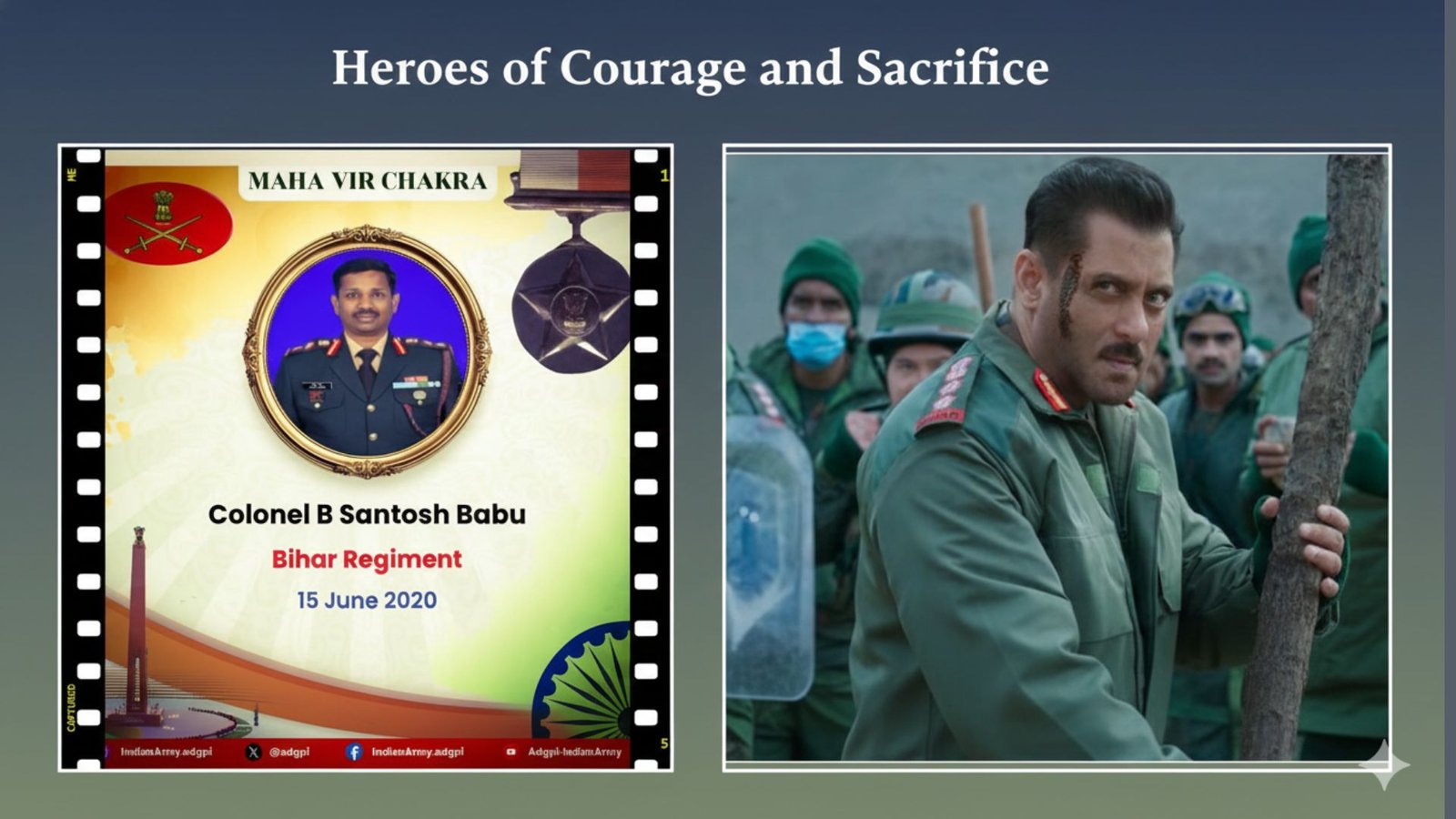
The Battle of Galwan on June 15, 2020, stands as one of the most defining moments in modern Indian military history. On that fateful night in the remote Galwan Valley of Eastern Ladakh, 20 brave Indian soldiers made the ultimate sacrifice while defending India’s sovereignty at the Line of Actual Control (LAC). This was the first deadly clash in 45 years between Indian and Chinese forces, showcasing unparalleled heroism, sacrifice, and the unwavering spirit of the Indian Army. The event not only reshaped India-China relations but also became a symbol of national pride and military valour. The soldiers of the Battle of Galwan fought without firearms under existing border protocols, armed only with iron rods, stones, and their indomitable courage—a testament to their commitment to the nation. Their sacrifice continues to inspire millions of Indians and represents the pinnacle of duty, honour, and selflessness.
What Was the Battle of Galwan? A Historic Confrontation
The Battle of Galwan erupted on the night of June 15-16, 2020, in the Galwan Valley, situated at approximately 14,000 feet above sea level near Patrol Point-14 (PP-14) in Eastern Ladakh. The clash occurred after weeks of escalating tensions along the Line of Actual Control, where India and China had deployed increased military forces. On June 6, 2020, both countries had agreed to a disengagement process following high-level talks, during which Chinese troops had initially withdrawn from their positions and dismantled their camps. However, on June 14, Chinese soldiers suddenly set up an unauthorised observation post at the LAC, violating the earlier agreement. This unilateral action prompted Colonel Santosh Babu, the Commanding Officer of the 16 Bihar Regiment, to personally lead a negotiation team to enforce the disengagement protocol and ensure the Chinese adhered to the agreed-upon terms.
The confrontation escalated when Chinese forces launched a violent, coordinated hand-to-hand attack on Indian soldiers using deadly weapons including iron rods, clubs embedded with nails, stones, and sharp implements. Unlike previous skirmishes where both sides respected protocols prohibiting firearms, the Chinese troops on this occasion came fully prepared with lethal weapons, marking a significant breach of established border conduct agreements. The battle raged for approximately six to seven hours in freezing temperatures, complete darkness, and sub-zero conditions. Despite being outnumbered and unarmed according to protocol, Indian soldiers fought with extraordinary valour, pushing back the Chinese forces and inflicting significant casualties on the enemy side. The violent clash resulted in the loss of 20 Indian soldiers, making it the deadliest India-China confrontation in decades and forever altering the strategic equation on India’s northern border.
Why the Battle of Galwan Matters in Indian Military History
The Battle of Galwan holds profound significance in Indian military and geopolitical history for multiple compelling reasons. First, it marked the deadliest military engagement between India and China in 45 years, shattering a long period of relative peace along the LAC despite periodic tensions. The clash shattered the assumption that peaceful coexistence could be taken for granted and demonstrated that China was willing to employ extreme force to challenge India’s territorial claims. This violent escalation forced New Delhi to recalibrate its strategic approach to border management and reassess the nature of the China threat.
The Battle of Galwan fundamentally altered India-China relations, creating a prolonged military standoff that necessitated 18 rounds of military-level talks for disengagement. Beyond diplomatic consequences, the clash became a symbol of Indian resilience and military professionalism. It demonstrated that India’s soldiers, despite being outnumbered and fighting without firearms, possessed the discipline, courage, and tactical acumen to inflict decisive defeats on a numerically superior adversary. The soldiers’ refusal to retreat despite overwhelming odds showcased a national resolve that transcended military considerations and became a matter of national pride.
Furthermore, the Battle of Galwan highlighted the extraordinary capacity of Indian soldiers to operate effectively in extreme high-altitude environments with thin oxygen levels, freezing temperatures reaching minus 40 degrees Celsius, and treacherous terrain. Fighting at 14,000 feet altitude in complete darkness and sub-zero conditions represented a level of physical and mental endurance that few militaries could match. The clash also forced the international community to take notice of India’s military capabilities and resolve, with reports suggesting that Indian forces inflicted far heavier casualties on Chinese troops than officially acknowledged by Beijing.

Colonel Santosh Babu – The Commanding Officer Who Led from the Front
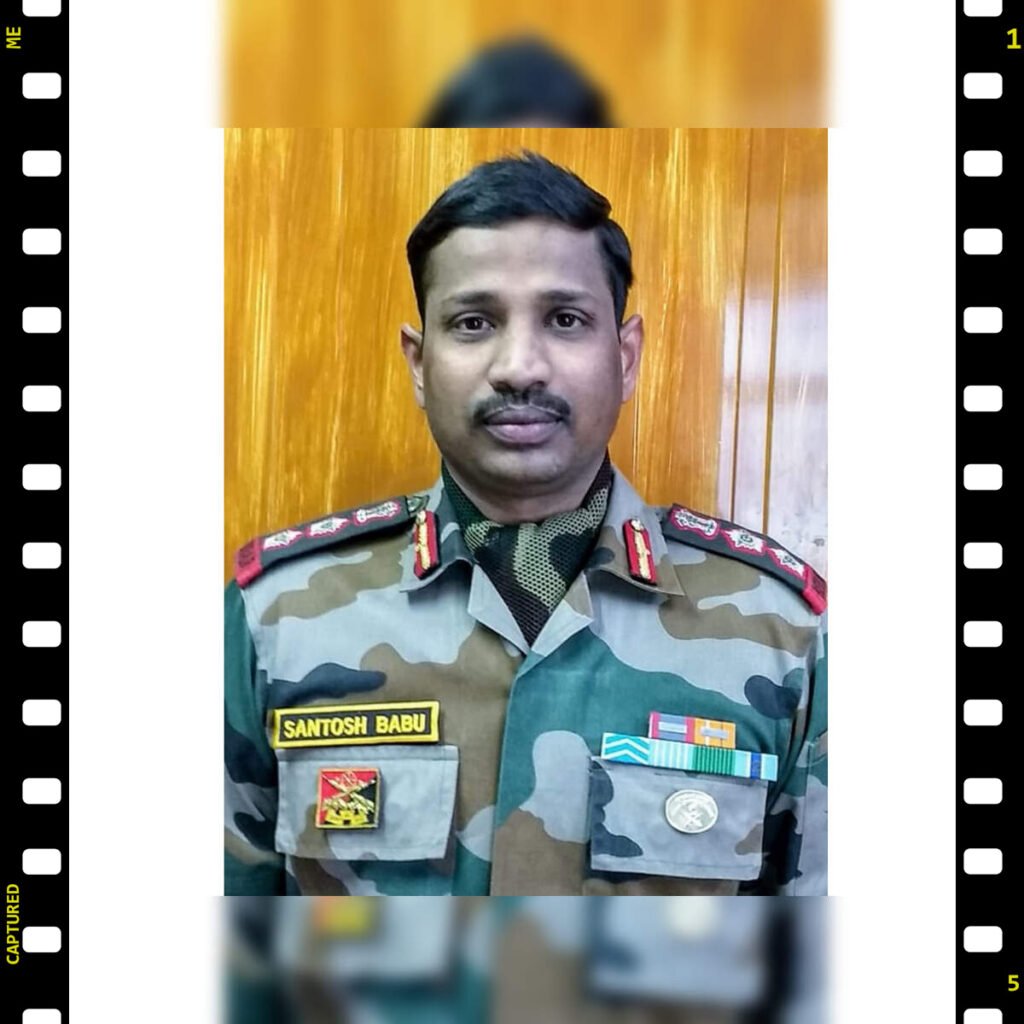
Colonel Bikumalla Santosh Babu, born in Suryapet, Telangana, stands as the towering figure whose leadership and sacrifice defined the Battle of Galwan. A decorated officer of the 16 Bihar Regiment, Colonel Babu was not just a military commander but a leader whose empathetic yet resolute approach to his responsibilities earned him the respect and admiration of every soldier under his command. He assumed command of the 16 Bihar Regiment on December 2, 2019, bringing with him extensive experience from multiple counterinsurgency and counter-infiltration operations across challenging border regions.
On the fateful night of June 15, 2020, Colonel Babu’s commitment to duty became evident when he personally decided to lead the negotiation with Chinese forces rather than delegating the task to a junior officer, despite protocol typically requiring only a Major-rank officer for such confrontations. Upon arrival at Patrol Point-14, Colonel Babu immediately sensed the danger—the Chinese soldiers present were reinforcements brought from outside the area, not the familiar forces that Indian troops had engaged with previously. Despite attempts at diplomatic resolution, the situation deteriorated rapidly when Chinese troops launched a coordinated violent assault with lethal weapons.
Colonel Babu suffered severe injuries from stones pelted by Chinese forces, causing him to bleed profusely. Yet, in a display of extraordinary courage and dedication, he refused to be evacuated and instead continued to lead his men from the front, sending injured soldiers back for medical treatment while calling for reinforcements. Around 9 PM, during the intense combat, Colonel Babu was struck on the head by a large stone and fell into the freezing waters of the Galwan River. The moment his soldiers witnessed their commanding officer’s fall, they responded with fury, charging at the Chinese forces with unmatched ferocity. Colonel Babu’s sacrifice was not in vain—his leadership inspired his men to repel the Chinese attack decisively, with significantly higher casualties inflicted on the enemy side.
In recognition of his unparalleled courage, sacrifice, and exemplary leadership, Colonel Bikumalla Santosh Babu was posthumously awarded the Maha Vir Chakra, India’s second-highest gallantry award, on January 26, 2021. His legacy lives on as the ultimate embodiment of military valour and a symbol of India’s commitment to defending its borders, no matter the cost. The Indian Army and the nation will forever remember Colonel Babu not merely as a military officer, but as a sentinel who guarded India’s sovereignty with his life.
Brave Soldiers Who Made the Ultimate Sacrifice
The Battle of Galwan claimed 20 noble lives, each soldier representing a story of courage, sacrifice, and unwavering commitment to the nation. Beyond Colonel Santosh Babu, numerous other soldiers demonstrated extraordinary bravery during that fateful night.
Havildar Sunil Kumar: The Dedicated Soldier from Bihar
Havildar Sunil Kumar hailed from Taranagar village in Patna district, Bihar, joining the Army in 2004 at just 18 years of age. A dedicated soldier of the 16 Bihar Regiment, Havildar Kumar had served with distinction for 16 years, developing a reputation for reliability and commitment to his duties. During the Battle of Galwan, he was among the first soldiers to respond to the escalating violence, engaging the Chinese forces with remarkable courage despite being vastly outnumbered. Havildar Kumar fought with extraordinary determination, sustaining serious injuries during the prolonged combat. His bravery and sacrifice were recognized posthumously with the Sena Medal on January 26, 2021. Havildar Sunil Kumar is survived by his family, including his father, mother, wife, and two sons—a legacy of sacrifice that will forever inspire his village and the nation.
Naik Deepak Kumar: The Nursing Assistant Who Saved 30 Lives
One of the most extraordinary stories of the Battle of Galwan belongs to Naik Deepak Kumar Singh from Farunda village in Rewa district, Madhya Pradesh. Born on July 15, 1989, Deepak Kumar joined the Indian Army in 2012 and served in the Army Medical Corps, providing crucial healthcare support to military personnel. Posted to the 16 Bihar Battalion on January 30, 2019, Naik Deepak Kumar was serving as a nursing assistant when the clash erupted on June 15, 2020.
What made Naik Deepak Kumar’s actions truly exceptional was his extraordinary humanity amid chaos and violence. While other soldiers engaged the Chinese forces in combat, Naik Deepak assessed the battlefield situation and moved forward to provide critical medical assistance. As the violence intensified and casualties mounted from both sides, he continued rendering first aid to injured soldiers while enduring severe stone pelting. Despite sustaining heavy grievous injuries himself, Naik Deepak refused to stop his medical work, saving the lives of more than 30 Indian soldiers during the seven-hour clash. Reports indicate that he even provided medical assistance to injured Chinese soldiers who were abandoned by their own forces.
According to accounts from soldiers who fought alongside him, Chinese forces eventually captured Naik Deepak, used him to treat their injured personnel, and then killed him. His wife, Rekha, later joined the Officers Training Academy in Chennai in May 2022 and was commissioned into the Indian Army as a lieutenant, carrying forward her husband’s legacy of service. Naik Deepak Kumar Singh was posthumously awarded the Vir Chakra, India’s third-highest wartime gallantry award, on January 26, 2021. His story exemplifies the highest ideals of military service and humanitarian values—a medic who placed saving lives above all other considerations.
Other Bravehearts of the Battle of Galwan
The other 17 martyrs of the Battle of Galwan each demonstrated remarkable courage during that dark night:
Naib Subedar Nuduram Soren from Mayurbhanj, Odisha, displayed determined ferocity during the clash, motivated his comrades with fierce determination, and fought bravely despite serious injuries. Naib Subedar Mandeep Singh from Patiala, Punjab, served as the sole breadwinner of his family, embodying the sacrifice that families make when soldiers are lost. Naib Subedar Satnam Singh, also from Gurdaspur, Punjab, brought 25 years of military experience to the battlefield that night.
Havildar K. Palani from Madurai, Tamil Nadu, was a 40-year-old veteran with 22 years of service. He was only one year away from retirement when he made the supreme sacrifice. Havildar Bipul Roy from Meerut, Uttar Pradesh, fought with the 16 Bihar Regiment despite being vastly outnumbered. The remaining fallen soldiers—Sepoy Rajesh Orang, Sepoy Ganesh Hansda, Sepoy Ganesh Ram, Sepoy Chandan Kumar, Sepoy Kundan Kumar, Sepoy Gurbinder Singh, Sepoy Aman Kumar, Sepoy Jai Kishore Singh, Sepoy Gurtej Singh, Sepoy Ankush, Sepoy K.K. Ojha, and Sepoy Chandan Kumar—each represented the finest traditions of the Indian Army.
Many of these soldiers were newly engaged or had families who were planning their marriages. Sepoy Kundan Ojha had a newborn daughter he never saw. Sepoy Gurbinder Singh was recently engaged. Yet each chose duty over personal happiness, demonstrating the profound commitment of India’s military personnel. Their collective sacrifice transformed the Battle of Galwan from a mere military clash into a national epic of courage and selflessness.
Stories of Courage Beyond the Battlefield
The Battle of Galwan was not merely a show of combat prowess; it was a demonstration of extraordinary human spirit, teamwork, and the capacity for compassion even amid violence. While soldiers engaged the enemy with fierce determination, many were simultaneously helping wounded comrades and fellow soldiers.
Soldiers fought despite sustaining grievous injuries, continuing to battle even with broken bones, severe lacerations, and wounds that would have incapacitated ordinary individuals. The unity and brotherhood among the 16 Bihar Regiment soldiers was palpable—when one soldier fell, others immediately moved to fill the gap, ensuring that the defensive line never wavered. Naik Deepak Kumar’s provision of medical care to both Indian and captured Chinese soldiers illustrated that even in the midst of a deadly confrontation, Indian soldiers maintained their humanity and professional values.
The rescue and evacuation of injured soldiers proceeded methodically despite the ongoing violence. Officers like Colonel Babu ensured that injured soldiers received priority evacuation while continuing to fight themselves. Reports indicate that soldiers executed a disciplined tactical retreat and regrouping, preventing further casualties once it became clear that reinforcements would arrive. This coordination and discipline in the face of overwhelming odds demonstrated the professional excellence of the Indian Army.
Sarvam Maya 2025: Understanding Ancient Philosophy in Modern Times
Life in Galwan Valley: The Extreme Conditions of High-Altitude Warfare
To fully appreciate the bravery displayed during the Battle of Galwan, one must understand the physical and environmental challenges that the soldiers faced. The Galwan Valley sits at approximately 14,000 feet above sea level, where oxygen levels are barely 60 percent of sea level concentrations. During June, the valley experiences temperatures that can plummet to minus 40 degrees Celsius on nights, and the Galwan River flows with swift, freezing currents.
The terrain around Galwan is among the most inhospitable on Earth—barren, rocky mountains with minimal vegetation, sharp stone ridges, and a landscape shaped by constant wind and ice. The valley is completely remote, with the nearest significant settlement being Leh, over 150 kilometres away. During the battle, soldiers fought in complete darkness without artificial lighting, adding an additional layer of difficulty to an already desperate situation.
The fact that 20 Indian soldiers, some of whom fell into the freezing Galwan River after being struck down, succumbed to their injuries was not necessarily evidence of enemy brutality alone—many died of hypothermia after prolonged exposure to sub-zero conditions while sustaining serious wounds. Fighting effectively under these conditions required not just military training but exceptional physical conditioning and mental fortitude. Many Indian soldiers had served in these regions for extended periods and had acclimated to the altitude, but even for them, the combination of thin air, freezing temperatures, darkness, and violent combat created an almost supernatural test of human endurance.
The extraordinary nature of bravery in Galwan becomes clear only when one visualizes the physical environment—soldiers engaged in hand-to-hand combat at an altitude where the human body struggles simply to breathe, in temperatures where exposed skin freezes in minutes, in darkness so complete that distinguishing friend from foe required proximity and trust, and across terrain where a single misstep could result in death. This context transforms the Battle of Galwan from merely a military engagement into an epic of human courage.
How the Nation Remembered the Heroes of Galwan
The martyrdom of the 20 soldiers of the Battle of Galwan triggered an unprecedented wave of national mourning and tributes across India. The bodies of the fallen were transported from Leh by military aircraft and then carried by road to their respective hometowns, where they received state funerals with full military honours.
Major Gallantry Awards and Recognitions
The Indian government recognized the extraordinary sacrifice of the Battle of Galwan soldiers through the highest military honours. On January 26, 2021, Republic Day, the nation posthumously conferred gallantry awards on the fallen soldiers:
- Colonel Bikumalla Santosh Babu received the Maha Vir Chakra, India’s second-highest gallantry award
- Naik Deepak Kumar Singh, Naib Subedar Nuduram Soren, Havildar K. Palani, and Sepoy Gurtej Singh were awarded the Vir Chakra, India’s third-highest gallantry award
- Havildar Sunil Kumar and other soldiers were posthumously awarded the Sena Medal for courage and dedication to duty
The Galwan War Memorial
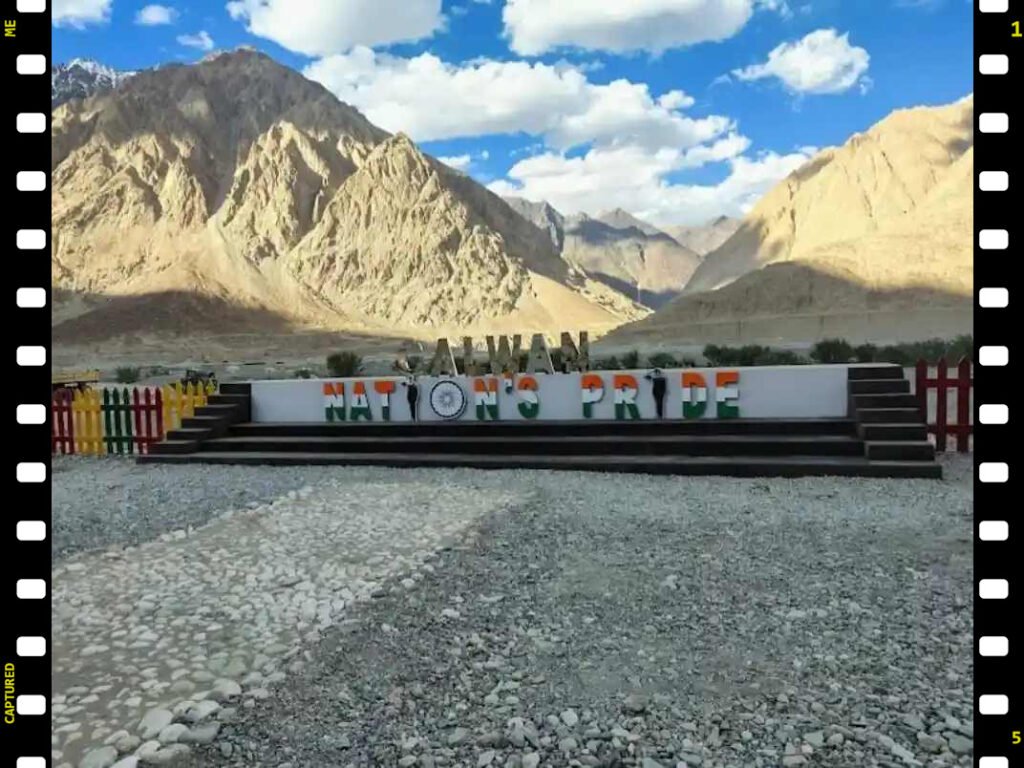
In December 2025, India unveiled the world’s highest war memorial in Ladakh, dedicated to the 20 heroes of the Battle of Galwan. The memorial, situated near the KM-120 post along the strategic Durbuk–Shyok–Daulat Beg Oldi (DS-DBO) Road, stands as a monumental tribute constructed using red and black granite symbolizing sacrifice and valour. The structure, shaped like a trishul (trident) and damru (celestial drum), represents divine energy and the towering Himalayan ranges.
The Galwan War Memorial complex features twenty bronze statues of the fallen soldiers, an eternal flame, the National Flag, a museum and digital gallery documenting the clash and Ladakh’s military history, an auditorium showcasing narratives of bravery, and facilities like the Tiger Brave Café and Braveheart Bistro. Defence Minister Rajnath Singh inaugurated the memorial virtually, marking a historic moment in India’s national commemoration.
Public and Military Response
The Battle of Galwan sparked an outpouring of national unity and patriotism. Union Home Minister Amit Shah stated that India would always remain indebted to its soldiers, while Defence Minister Rajnath Singh emphasized that the bravery and sacrifice would not be forgotten. Schools, colleges, and public institutions across India organized remembrance events and paid tributes to the martyrs.
In the soldiers’ native villages and towns, public memorials were established, and their families received support from both government and civil society. The families of the martyrs became symbols of sacrifice themselves, embodying the costs of national security and the proud legacy of military service.
Lessons from the Heroes of the Battle of Galwan
The Battle of Galwan offers profound lessons that extend far beyond military strategy or geopolitical analysis. These lessons resonate at the deepest level of national consciousness and human values.
Courage Beyond Fear
The soldiers of the Battle of Galwan demonstrated that true courage is not the absence of fear but action taken in the face of overwhelming adversity. Despite being vastly outnumbered, without firearms, in darkness, at an altitude where breathing is difficult, and in temperatures that could kill within minutes, these soldiers fought with determination and tactical skill. Their courage was not a momentary heroic gesture but sustained resistance across hours of brutal combat.
Duty and Sacrifice
The Battle of Galwan embodied the highest expression of duty. Colonel Babu could have remained in a command post; instead, he personally led negotiations, exposing himself to danger. Naik Deepak Kumar could have sought shelter; instead, he moved toward danger to save others. Each of the 20 martyrs chose national interest over personal safety—a principle that defines military service at its finest.
Leadership by Example
Colonel Santosh Babu’s leadership style—calm, empathetic, yet resolute—represented the ideal military commander. He led from the front, refused evacuation despite severe injuries, and inspired his men through personal example rather than orders. This leadership model transformed ordinary soldiers into heroes and demonstrated how exceptional leaders inspire exceptional performance.
National Unity
The Battle of Galwan transcended regional, religious, and linguistic boundaries. Soldiers from Bihar, Odisha, Punjab, Tamil Nadu, Madhya Pradesh, and numerous other states fought together and died together. Their sacrifice united the nation in ways that politics could not, creating a shared national narrative of pride and resolve.
Humanity and Compassion
Naik Deepak Kumar’s provision of medical care to enemy soldiers amid a brutal clash illustrated that humanity and compassion need not be abandoned even in warfare. This lesson suggests that national interest and human decency are not mutually exclusive—a profound teaching for future generations.
Conclusion: The Immortal Spirit of Galwan
The Battle of Galwan on June 15, 2020, will forever remain inscribed in the annals of Indian military history and national consciousness. The 20 soldiers who made the supreme sacrifice in that remote, freezing valley at the Line of Actual Control demonstrated that the spirit of a nation—its commitment to sovereignty, its willingness to defend its borders, and its capacity for extraordinary courage—cannot be measured in military hardware or numerical advantage.
Colonel Bikumalla Santosh Babu, Naik Deepak Kumar Singh, Havildar Sunil Kumar, and the 17 other soldiers of the 16 Bihar Regiment transformed a military clash into a national epic. In the darkness of that mountain night, with the Galwan River flowing beneath them and the weight of national responsibility on their shoulders, they chose courage over self-preservation, duty over comfort, and national interest over personal safety.
The newly inaugurated Galwan War Memorial stands as a permanent testament to their sacrifice, attracting future generations to contemplate the costs of freedom and the extraordinary capacity of ordinary soldiers to perform extraordinary deeds. As long as the winds sweep across Galwan’s icy expanse and the Galwan River flows through that remote valley, the echoes of their sacrifice will remind Indians that their borders are guarded by soldiers of unmatched courage and character.
The Battle of Galwan transcended a military engagement to become a defining moment in India’s contemporary history. It demonstrated to the world that India’s military possesses not just professional competence but also an indomitable spirit that cannot be broken by superior numbers or preparation. The legacy of the 20 martyrs will inspire generations of Indians to remember that true heroism lies not in spectacular displays but in quiet, steadfast commitment to duty, even when that commitment demands the ultimate sacrifice.

Asif Ali is an entertainment content creator and movie enthusiast at Movie Trend. I covers the latest movie news, OTT updates, and trending entertainment stories with a focus on accuracy, originality, and reader value.