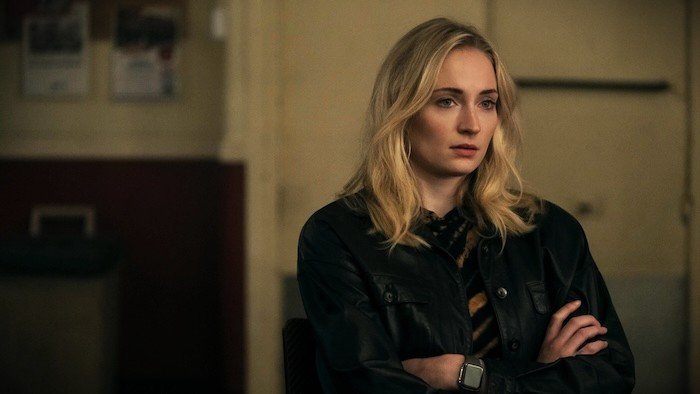
1️⃣ A Crime Thriller With Style
Prime Video’s latest crime thriller Steal burst onto streaming screens on 21st January 2026, immediately capturing attention with its slick execution, powerful performances, and a premise that transforms an ordinary office day into a £4 billion nightmare. Created by Sotiris Nikias and starring Game of Thrones alumna Sophie Turner, this six-episode British thriller delivers a high-stakes heist story wrapped in corporate intrigue and moral complexity.
The series commands attention not merely through its audacious premise but through its sophisticated visual style, tightly-wound suspense, and an ensemble cast that elevates familiar genre elements into something genuinely compelling. Within days of its release, Steal has garnered significant buzz across social media platforms, with viewers dissecting its layered conspiracy and debating its provocative finale. With a 74% approval rating on Rotten Tomatoes and “generally favourable” reviews on Metacritic, the show positions itself as Prime Video’s first major thriller offering of 2026.
First impressions reveal a series that understands its strengths: Turner’s magnetic screen presence anchors a story that escalates from workplace monotony to life-threatening chaos in minutes, whilst the production’s grounded British aesthetic distinguishes it from flashier American heist fare.
2️⃣ What Is Steal Season 1 About? (No Spoilers)
Steal centres on Zara Dunne (Sophie Turner), an ordinary office worker at Lochmill Capital, a London pension fund investment company. Zara leads an unremarkable existence marked by weekend drinking, workplace boredom, and the daily grind alongside her best mate Luke Selborn (Archie Madekwe). Their mundane Tuesday morning transforms into terror when a gang of violent thieves wearing disturbing facial prosthetics storm the office, holding employees hostage and forcing Zara and Luke to execute a digital transfer of £4 billion in pension funds.
What initially appears as a straightforward hostage situation rapidly evolves into a complex web of conspiracy, betrayal, and hidden agendas. The investigation is led by DCI Demetrius “Rhys” Covaci (Jacob Fortune-Lloyd), a recently relapsed gambling addict whose personal demons complicate his pursuit of justice. Financial crimes investigator Darren Yoshida (Andrew Koji) joins the case, bringing expertise in tracking illegal money movements through offshore accounts and tax havens.
The series blends crime thriller elements with psychological tension, examining how ordinary people respond when thrust into extraordinary circumstances. As layers peel away, the question shifts from “who executed the heist” to “who orchestrated it, and why?” The show explores themes of economic inequality, corporate corruption, and the moral compromises individuals make when survival demands difficult choices.
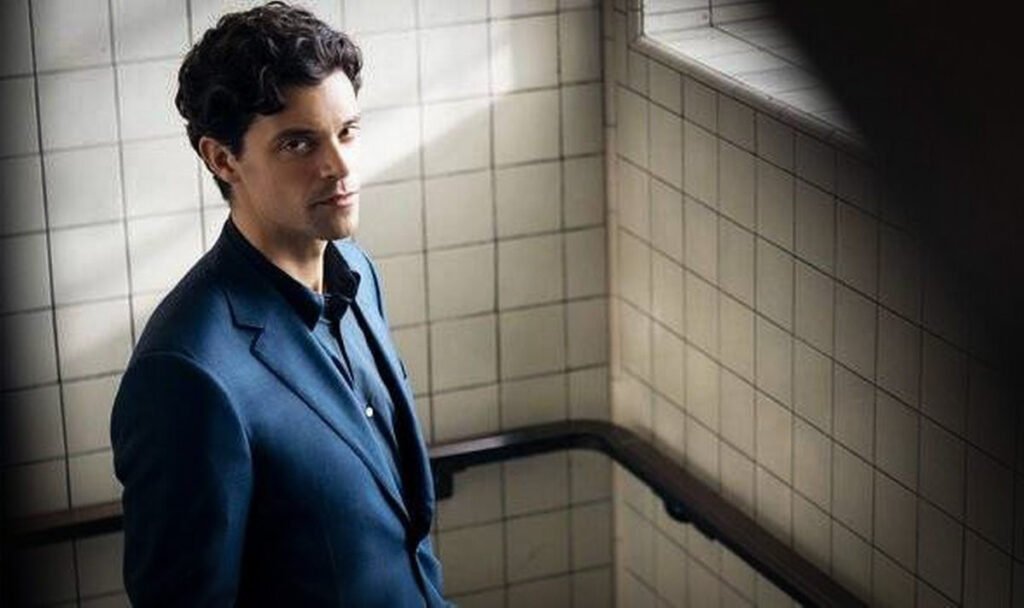
3️⃣ Performances & Cast Review
Sophie Turner delivers a career-defining performance as Zara Dunne, demonstrating remarkable range as she navigates her character’s transformation from hungover office drone to desperate survivor fighting for her life. Turner brings vulnerability and steely determination to the role, making Zara’s journey both believable and emotionally resonant. Critics have specifically praised Turner’s ability to convey complex internal conflicts through subtle facial expressions and body language, particularly in sequences requiring her to maintain composure whilst internally unravelling.
Archie Madekwe, known for Saltburn, matches Turner’s intensity as Luke, whose emotional breakdown provides some of the series’ most visceral moments. Madekwe excels at portraying Luke’s spiral from confident participant to psychological wreck, his performance grounding the show’s more outlandish plot developments in genuine human fragility.
Jacob Fortune-Lloyd brings depth to DCI Rhys, a character who could easily have devolved into procedural cliché. Instead, Fortune-Lloyd crafts a nuanced portrait of addiction, professional competence, and moral compromise. His gambling addiction subplot adds layers to the investigation scenes, creating tension even in moments away from the central heist.
Andrew Koji’s Darren Yoshida operates largely in the background for most episodes, which serves the narrative’s ultimate revelation. When given centre stage in the finale, Koji delivers a compelling ideological monologue that recontextualises everything preceding it. Supporting performances from Andrew Howard as the volatile robber Morgan, Jonathan Slinger as gang leader London, and Harry Michell as the duplicitous Milo add texture to the ensemble.
Whilst the cast largely succeeds, some characters remain frustratingly underutilised. The MI5 involvement, led by Yusra Warsama’s character, feels rushed and insufficiently developed, suggesting budget or time constraints limited their narrative potential.

4️⃣ Direction, Cinematography & Visual Style
Director Sam Miller, who helmed three of the six episodes, establishes a distinctive visual language that differentiates Steal from typical streaming thrillers. The series embraces a grounded, almost documentary-like aesthetic for office sequences, employing handheld cameras and natural lighting to emphasise the mundane reality of Zara’s pre-heist existence. This contrasts sharply with the heightened, more stylised cinematography during action sequences and moments of psychological tension.
The colour palette shifts throughout the series, moving from the sterile greys and blues of corporate London to warmer, more saturated tones as Zara’s desperation intensifies. Night sequences utilise shadow and minimal lighting effectively, creating claustrophobic atmospheres that mirror the characters’ emotional states. The disturbing facial prosthetics worn by the robbers represent a bold visual choice, simultaneously making them memorable whilst raising questions about realism—as some critics noted, the disguises are so distinctive they would likely attract immediate attention.
Camera work during the heist sequences demonstrates technical proficiency, employing long takes and steady tracking shots that maintain spatial clarity even during chaotic moments. Miller’s direction keeps viewers oriented within the Lochmill offices, establishing clear geography that pays dividends during the finale’s violent confrontation. The pacing varies across episodes, with some sequences benefiting from extended tension whilst others feel unnecessarily protracted.
5️⃣ Storytelling & Pacing: Slow Burn or Gripping?
Steal employs a distinctive narrative structure, opening with the heist’s immediate aftermath before revealing through flashbacks that Zara knew about the plan beforehand. This “aftermath-first” approach has drawn comparisons to series like Damages, creating dramatic irony as viewers watch Zara navigate the investigation whilst concealing her involvement.
The first episode delivers electric pacing, establishing premise, characters, and stakes within 42 minutes of taut storytelling. Episodes two through four maintain engagement through character development and investigative procedural elements, though some scenes involving police bureaucracy and MI5 politics drag. The series sags noticeably during sequences focused exclusively on the investigation when Turner and Madekwe are absent, as the supporting cast, whilst competent, lack the magnetic pull of the leads.
Episode five accelerates dramatically as revelations accumulate and threats intensify, setting up a finale that delivers multiple twists within its runtime. The penultimate episode’s revelation about Milo’s involvement reconfigures viewer understanding of previous events, rewarding close attention whilst potentially frustrating those seeking simpler explanations.
Critics have noted that at six episodes totalling approximately 270 minutes, Steal occasionally feels overextended. Some reviewers suggested the story could have been more effectively told across four episodes, eliminating repetitive investigative scenes and tightening the conspiracy’s reveal. However, defenders argue the extended runtime allows for character depth that would be sacrificed in a leaner cut.
6️⃣ Dark Themes & Hidden Secrets
Beyond its heist mechanics, Steal explores substantive themes about economic inequality, systemic corruption, and the moral compromises capitalism demands. The series presents pension fund theft as more than criminal opportunism—it becomes a metaphor for how financial systems exploit ordinary workers whilst protecting the wealthy through offshore tax havens and legal loopholes.
Zara’s character embodies the psychological toll of economic precarity. Her weekend drinking, workplace dissatisfaction, and general aimlessness reflect a generation trapped in dead-end corporate jobs with little prospect of meaningful advancement. The heist, horrifying as it is, represents the only pathway she perceives towards escape from soul-crushing routine. This doesn’t excuse her participation but contextualises it within broader systemic failures.
The show maintains moral ambiguity throughout, refusing to clearly delineate heroes and villains. Even the mastermind’s motivations, when finally revealed, carry ideological weight that complicates simple condemnation. Steal asks uncomfortable questions about whether exposing systemic corruption justifies criminal methods, and whether those who benefit from unjust systems bear responsibility for perpetuating them.
Psychological tension permeates every episode as characters conceal secrets, form temporary alliances, and betray one another based on shifting calculations of self-interest. Trust becomes the series’ most valuable and rarest commodity, with genuine connections between characters perpetually undermined by competing agendas and survival instincts.
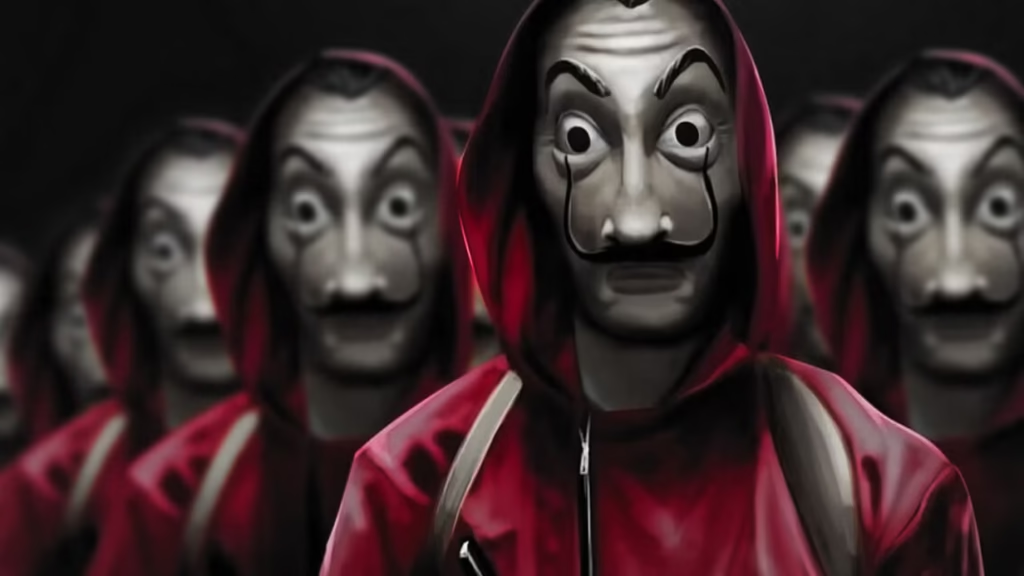
7️⃣ Steal Season 1 Ending Explained (⚠️ SPOILER SECTION)
WARNING: Major spoilers ahead for the Steal Season 1 finale
The finale’s shocking revelation centres on Darren Yoshida (Andrew Koji), the financial crimes investigator assisting the police. Darren is revealed as the heist’s architect, having recruited London’s criminal crew and manipulated every participant from the shadows whilst maintaining his investigative cover. His motivations transcend personal greed—Darren orchestrated the £4 billion theft to expose how the ultra-wealthy exploit offshore tax havens whilst ordinary citizens fund pensions they’ll never adequately benefit from.
The episode’s climactic sequence finds Morgan (Andrew Howard), one of the original robbers, breaking into Zara’s home holding Luke hostage. Morgan demands Zara’s cryptocurrency wallet containing her £5 million share. During the violent confrontation, Zara discovers that Milo Carter-Walsh (Harry Michell), a senior risk analyst at Lochmill, was another insider recruited by Darren, paid £20 million for his participation. When Milo attempts to defend himself with pepper spray, Morgan fatally stabs him.
The struggle concludes with Zara using a taser on Morgan’s neck with lethal voltage whilst Rhys is shot during the altercation. Milo’s death is subsequently staged as suicide, the same fate originally planned for Zara. She was recruited specifically because, as Milo cruelly explains, she was “the biggest mess in the office”—depressed, alcoholic, and disposable, making her the perfect scapegoat if the plan required a fall guy.
Rhys ultimately connects the conspiracy to Darren, confronting him at Lochmill Capital. Darren admits orchestrating everything, explaining his Robin Hood-esque philosophy: the stolen £4 billion was moved through accounts of corrupt elites before being returned to pensions, whilst Darren skimmed £10 million from tax havens. He offers Rhys this money to settle gambling debts and disappear, essentially bribing him for silence.
Zara convinces Rhys to reject Darren’s offer and turn him in, which he regrettably does. However, the final twist reveals Zara’s ultimate pragmatism: she secretly kept Milo’s £20 million cryptocurrency wallet, as nobody knew it existed. The series concludes with Zara and Rhys walking away from Lochmill Capital, financially secure through stolen funds they’ve chosen to keep, blurring the line between justice and opportunism.
8️⃣ What the Ending Means for Season 2
The finale deliberately leaves narrative threads dangling, positioning potential continuation whilst functioning as a standalone story. Several unresolved questions fuel Season 2 speculation: How will Zara and Rhys use the £20 million? Will authorities discover their deception? Can they evade the consequences of keeping stolen money? What happens to Darren Yoshida following his arrest?
The ending’s moral complexity suggests fascinating directions for continuation. Zara and Rhys now possess wealth enabling freedom from their previous lives, but they’ve achieved it through complicity in theft. A second season could explore whether guilt, paranoia, or external threats catch up with them. Alternatively, the series could examine copycat schemes inspired by Darren’s ideological crusade, positioning Zara and Rhys as unwilling experts drawn back into similar conspiracies.
As of publication, Prime Video has not officially renewed Steal for Season 2. Industry analysts currently place renewal chances below fifty per cent, noting that whilst the series has generated strong word-of-mouth and steady viewership growth, many streaming thrillers are designed as limited series. The cast’s availability presents another complication, as Turner, Madekwe, and Fortune-Lloyd are likely committed to other projects.
However, the series’ climbing ratings, robust social media engagement, and open-ended conclusion keep hope alive amongst fans. If renewed, production likely wouldn’t commence until late 2026 at earliest, positioning a potential second season for 2027 or 2028 release.
Also Read:
Steal Season 1 Review: A Stylish Thriller With a Shocking Finale
9️⃣ What Works & What Doesn’t
👍 Pros
Style and Atmosphere: Steal distinguishes itself through sophisticated visual craftsmanship and a grounded British aesthetic that prioritises realism over flashy spectacle. The cinematography and production design create immersive environments that enhance narrative tension.
Performances: Sophie Turner delivers a career-best performance, ably supported by Archie Madekwe and Jacob Fortune-Lloyd. The central trio’s chemistry and emotional authenticity ground even the plot’s more far-fetched developments in believable human responses.
Bold Ending: The finale’s moral ambiguity and refusal to provide clean resolution demonstrate narrative confidence. By allowing Zara to keep stolen money rather than forcing redemption, the series respects audience intelligence and embraces complexity.
Thematic Depth: Beyond heist mechanics, Steal offers substantive commentary on economic inequality, systemic corruption, and the psychological toll of modern capitalism. These themes elevate the material beyond genre exercise.
👎 Cons
Pacing Issues: The six-episode structure occasionally feels padded, particularly during investigative sequences lacking the main cast. Episodes three and four drag during police procedural scenes, suggesting a tighter four-episode structure might have served the story better.
Underused Characters: Several promising supporting characters receive insufficient development. The MI5 subplot feels rushed and underdeveloped, whilst characters like the gang leader London lack the depth to match their narrative importance.
Confusing Moments: The conspiracy’s complexity, whilst rewarding for attentive viewers, occasionally crosses into confusion. Some viewers may struggle tracking the web of connections, particularly Darren’s behind-the-scenes manipulations that are revealed rather than shown.
Realism Concerns: Certain plot elements strain credibility, most notably the robbers’ distinctive facial prosthetics, which multiple reviewers noted would attract immediate attention rather than provide disguise. The ease with which billions move through cryptocurrency also simplifies complex financial systems.
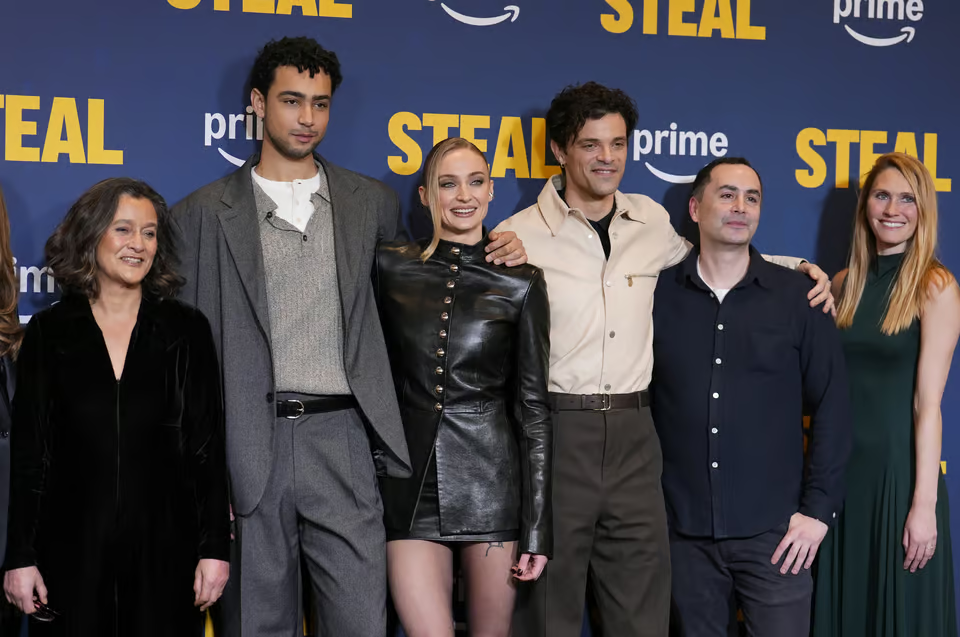
🔟 Final Verdict: Is Steal Season 1 Worth Watching?
Steal Season 1 earns a solid ⭐⭐⭐½ out of 5 stars, positioning itself as an accomplished thriller elevated by exceptional performances and thematic ambition, though occasionally hampered by pacing issues and narrative overcomplexity.
This series will particularly appeal to viewers who appreciate character-driven crime dramas over action-heavy heist spectacles. Fans of British thrillers like Bodyguard, The Capture, or Line of Duty will recognise Steal‘s DNA whilst appreciating its distinctive voice. Sophie Turner enthusiasts seeking to see her range beyond Sansa Stark will find her performance alone justifies the investment.
The show rewards close attention and patience during slower episodes, ultimately delivering payoffs that justify the extended setup. However, viewers seeking straightforward heist thrills or rapid pacing might find Steal occasionally frustrating. The moral ambiguity won’t satisfy those preferring clear-cut heroes and villains, as the series deliberately complicates such distinctions.
Binge-watch verdict: Yes, but with caveats. The series functions best when consumed across two or three sittings rather than a single marathon session. This allows breathing room to process revelations and appreciate character nuances that might blur during rapid consumption. The finale’s impact benefits from fresh memory of earlier episodes, making timely completion worthwhile.
Steal doesn’t revolutionise the heist genre but executes its premise with enough style, intelligence, and emotional honesty to stand out in a crowded streaming landscape. It confirms Sophie Turner’s dramatic range whilst delivering a conspiracy thriller that respects audience intelligence. For those willing to invest in character development and thematic complexity over constant action, Steal Season 1 provides satisfying, thought-provoking entertainment.
Steal Season 1 is now streaming exclusively on Prime Video with all six episodes available.

Asif Ali is an entertainment content creator and movie enthusiast at Movie Trend. I covers the latest movie news, OTT updates, and trending entertainment stories with a focus on accuracy, originality, and reader value.