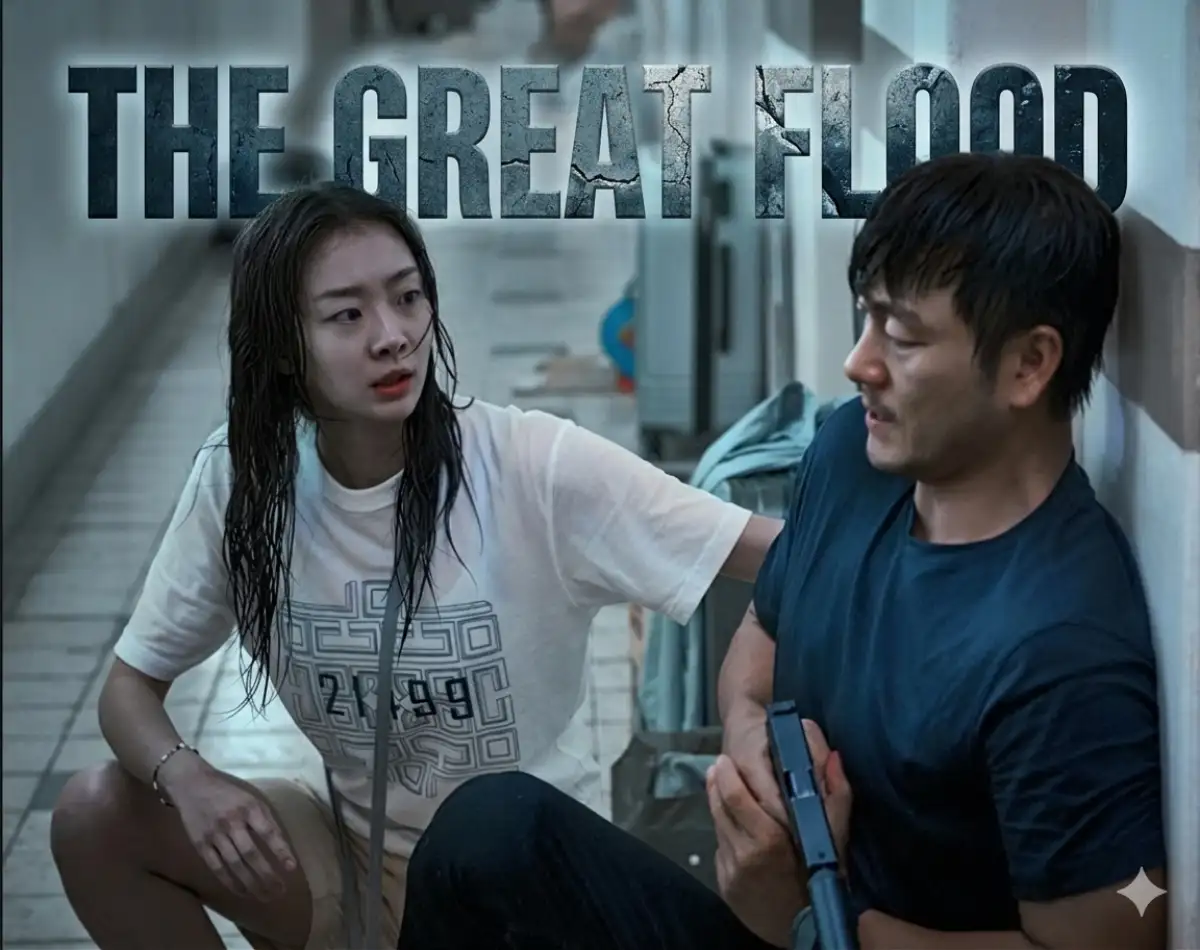
Netflix’s highly anticipated South Korean disaster thriller The Great Flood arrived on the streaming platform on December 19, 2025, and has already sparked significant conversation among viewers and critics about its ambitious narrative structure. The film, directed by Kim Byung-woo, presents a unique blend of high-stakes survival drama and science fiction elements that has divided the audience, with critics praising the strong performances and visual quality while questioning whether the film’s sudden genre shift from apocalypse thriller to sci-fi narrative ultimately strengthens or undermines the core story. This emerging debate highlights broader questions about balancing multiple genres within a single feature film.
Latest Update: The Great Flood Movie Netflix
The Great Flood is now officially available for global audiences on Netflix, following its world premiere at the 30th Busan International Film Festival on September 18, 2025. The film’s release date was December 19, 2025, and it has already generated substantial viewership and online discussion across social media platforms within just 48 hours of launch.
The film stars acclaimed Korean actors Kim Da-mi (known for Itaewon Class and Our Beloved Summer) as Gu An-na, an AI researcher trapped in a sinking apartment building during a catastrophic global flood, and Park Hae-soo (famous for Squid Game) as Son Hee-jo, a security operative tasked with a mysterious rescue mission.
According to official information from Netflix, the story follows a single day when humanity faces its potential extinction due to an asteroid impact that triggers massive flooding across Earth. The narrative focuses on An-na’s desperate struggle to protect her young son while being confronted with shocking revelations about her scientific work and its connection to humanity’s survival.
Background: From Disaster Thriller to Sci-Fi Narrative
When audiences first encountered the promotional materials for The Great Flood, many anticipated a traditional disaster film—a survival story centered on ordinary people facing extraordinary natural catastrophes, much like films such as 2012. However, the film’s central twist restructures viewer expectations entirely.
The story begins as a grounded apocalyptic narrative: a mother and her son are trapped in a flooding apartment building while chaos erupts around them. This first act operates effectively as a high-tension survival thriller, with claustrophobic scenes of rising water and human desperation creating authentic emotional stakes.
Approximately halfway through the film, however, The Great Flood reveals that protagonist An-na is not simply a mother trying to save her son—she is an AI researcher whose expertise in emotional artificial intelligence makes her critical to humanity’s future. This revelation transforms the film’s genre and thematic focus entirely. Instead of being purely about survival against natural disaster, the narrative pivots toward existential sci-fi questions about consciousness, human emotion, artificial intelligence, and whether synthetic beings can preserve human emotional capacity.
Director Kim Byung-woo has intentionally crafted this genre shift as a deliberate artistic choice. In interviews, the filmmaker explained that the script was designed to feel disorienting and strange, with the tension between genres reflecting the uncertainty and transformation experienced by the protagonist. The film incorporates time loops, simulation theory, and advanced technology concepts that push the narrative well beyond traditional disaster movie territory.
Public Reaction and Industry Buzz: A Divided Audience
The Great Flood has generated sharply divided reactions across social media and critical platforms since its December 19 release. Rather than achieving universal acclaim, the film has become what many entertainment analysts call a “polarizing title”—one that viewers either embrace enthusiastically or reject as unnecessarily complicated.
On Rotten Tomatoes, the film holds a 60% critical score based on reviews from 10 critics, but the audience rating is considerably lower at 39% with over 50 viewer ratings, indicating that general audiences responded less favorably than professional critics.
Positive Reception and Emotional Engagement
Supporters of The Great Flood emphasize the film’s emotional depth and thematic ambition. Multiple X (formerly Twitter) users expressed strong appreciation, with one viewer describing the film as “a 10/10” and noting that it works best when watched “with your feelings” rather than strict logic. Another viewer praised the performances: “The Great Flood and all the casts deserve to bag every single movie awards possible. Kim Dami, Park Haesoo, and Kwon Eunseong make the movie more alive with their flawless acting”.
Several fans and critics noted that the film transcends surface-level disaster narrative to explore deeper questions about maternal love, sacrifice, and what humans are willing to accept to preserve their species. This perspective argues that the sci-fi elements serve the emotional core rather than distracting from it.
Critical Concerns About Genre Execution
Conversely, many viewers expressed frustration with the narrative structure and genre transition. A significant body of X criticism focused on the abruptness of the sci-fi shift. One viewer described the film as feeling like it “ends in the first 30 minutes and then instantly reboots itself,” criticizing how the sudden pivot to science fiction undermined the survival thriller momentum.
Another comment captured widespread sentiment: “The Great Flood is a mixed bag. Different genre clubbed into one heavily relying on dialogues and emotions. Time loop with flood situation is a good idea but AI, experiment, sci-fi all looked like fillers for the missing pieces and many times confuses the narration”.
Reviewers noted that while the film’s visual effects and cast performances received consistent praise, the storytelling struggled to balance narrative ambition with thematic clarity. Some felt the sci-fi concepts—including AI consciousness, emotional engines, and simulation technology—added unnecessary complexity that distracted from the intimate human story about a mother protecting her child.
Cast Performance and Technical Elements
Despite divided opinions about narrative structure, professional critics and audiences largely agreed on the film’s technical strengths. Kim Da-mi’s performance generated particular discussion, with both supporters and skeptics acknowledging her commitment to the complex role. Park Hae-soo similarly received recognition for effectively conveying emotional transformation and mysterious motivations throughout the film.
In a production presentation interview, Park Hae-soo expressed his genuine appreciation for Kim Da-mi’s work: “Despite the many challenging scenes, I was deeply moved by Kim Da-mi’s sincerity and her willingness to give her all in every performance. I was truly impressed”. Kim Da-mi responded that working with Park Hae-soo provided emotional support during demanding filming, noting his presence “always lift my spirits”.
The film’s visual cinematography was also recognized as a particular strength. Rather than relying on expansive external destruction scenes typical of disaster movies, director Kim Byung-woo confined much of the action to the apartment building’s interior, making the rising water itself the central visual element—a choice that created sustained tension without requiring massive set pieces.
What This Means for Sci-Fi Disaster Cinema and Netflix’s Korean Content Strategy
The Great Flood’s mixed reception carries implications for how streaming platforms and filmmakers approach blending multiple genres within single features. The film demonstrates both the creative risks and potential audience alienation that accompanies ambitious narrative experimentation.
For Netflix specifically, The Great Flood represents the company’s continued investment in Korean cinema as a global entertainment driver. The film’s $30+ million budget and major star power reflect Netflix’s strategic commitment to Korean content production, even when audience response proves divided.
Industry observers note that the film’s performance may influence future production decisions regarding genre-bending narratives. Some analysts argue the film’s approach proves that audiences increasingly demand clear narrative identity, while others contend that adventurous storytelling deserves space even when it challenges viewer expectations.
Additionally, The Great Flood enters a growing conversation about whether apocalyptic narratives function better as intimate human stories or as large-scale spectacle. The film’s emphasis on emotional and philosophical dimensions rather than massive destruction sequences suggests a shift in how disaster narratives are being conceptualized in international cinema.
What Comes Next for Director Kim Byung-woo and Korean Streaming Cinema
Following The Great Flood’s December 2025 release, attention now focuses on the film’s streaming performance metrics and whether its 39% audience score will affect its long-term viewership on the Netflix platform. Given that mixed critical reception often translates into strong word-of-mouth discovery, the film may experience audience growth as viewers curious about the controversial genre shift explore the title.
For director Kim Byung-woo, The Great Flood confirms his reputation as a filmmaker willing to challenge conventional narrative structures within high-budget productions. His previous film, The Terror Live, similarly combined multiple genres and emotional registers within a thriller framework, suggesting this approach represents his artistic signature rather than a one-time experiment.
The film’s commercial performance on Netflix—measured through completion rates and subscriber engagement—will likely influence whether similar genre-blending narratives receive greenlit at major streaming platforms in coming years.
Conclusion: A Thought-Provoking but Contentious Addition to Netflix’s Korean Library
The Great Flood delivers exactly what its marketing promised: a Korean sci-fi disaster thriller that refuses easy categorization or conventional storytelling. The film’s primary achievement lies in its emotional commitment and visual execution, with cast performances—particularly from Kim Da-mi and Park Hae-soo—anchoring complex thematic material.
However, whether the film’s ambitious genre shift strengthens or undermines the apocalypse narrative ultimately depends on individual viewer preferences. Those prioritizing emotional depth and philosophical questions likely found the sci-fi elements enriching, while audiences seeking straightforward survival drama experienced the genre transition as narrative fragmentation.
For Indian viewers accessing Netflix, The Great Flood offers a distinctly different experience from typical Hollywood or Indian entertainment offerings. The film’s willingness to prioritize thematic complexity over audience reassurance represents a significant departure from mainstream commercial cinema. Whether this approach constitutes bold artistic vision or misguided ambition remains, appropriately, divided among those who have watched the film.
The Great Flood is currently streaming exclusively on Netflix globally, with no theatrical release planned. The film’s approximately 1 hour 46 minute runtime makes it accessible for streaming viewership, and the film is available in multiple audio tracks including English subtitles for non-Korean speaking audiences.

Asif Ali is an entertainment content creator and movie enthusiast at Movie Trend. I covers the latest movie news, OTT updates, and trending entertainment stories with a focus on accuracy, originality, and reader value.