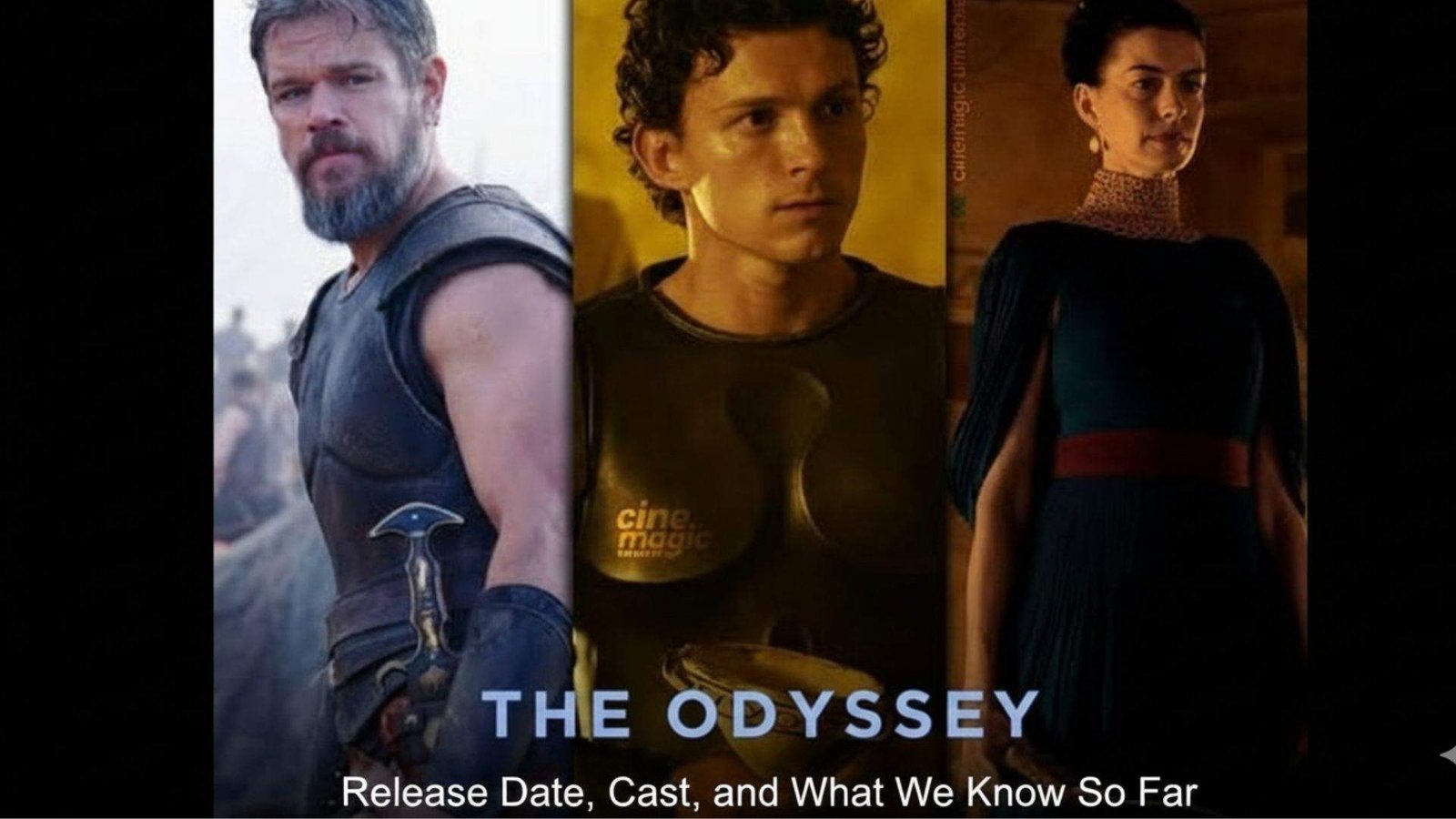
Christopher Nolan’s highly anticipated adaptation of Homer’s classic epic poem, The Odyssey, is officially confirmed for theatrical release on July 17, 2026, marking Hollywood’s significant renewed interest in bringing ancient mythological narratives to the big screen. Universal Pictures made the official announcement in December 2024, confirming an ambitious project filmed across multiple international locations using cutting-edge IMAX film technology—a first for Nolan’s filmography. The film features an all-star ensemble cast including Matt Damon as the legendary Odysseus, Tom Holland as his son Telemachus, Anne Hathaway as the devoted Penelope, Robert Pattinson, Lupita Nyong’o, Zendaya as Athena, and Charlize Theron as Circe. This groundbreaking adaptation represents a pivotal moment in cinema, as 70% of today’s movies and books are based on ancient myths, reflecting Hollywood’s deep commitment to reimagining classical narratives for modern audiences.
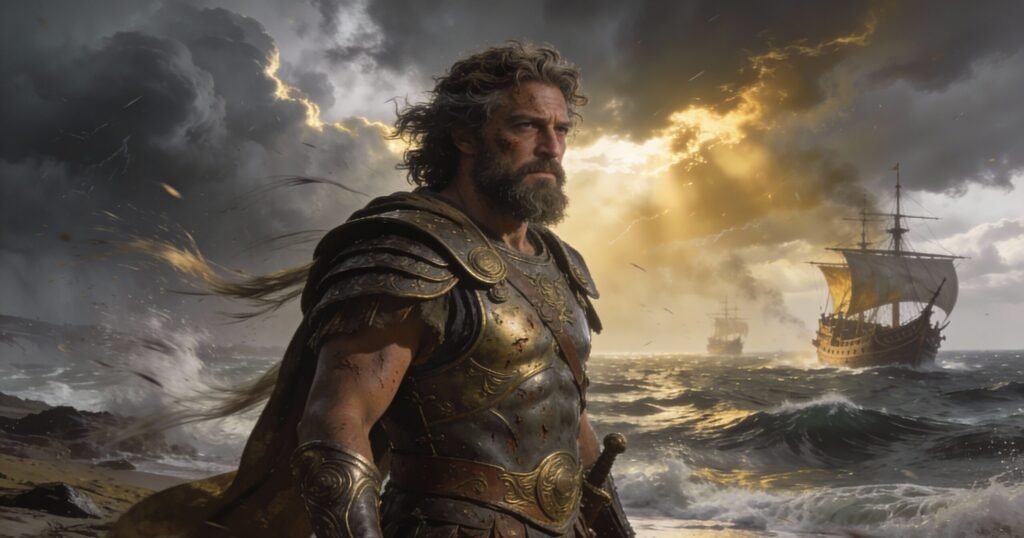
Latest Update & Official Information
Christopher Nolan has announced a mythic action epic that traces Odysseus’s perilous journey home following the Trojan War, a narrative spanning over 12,000 lines in Homer’s original 8th-century BC poem. The film brings the “foundational saga” of Western literature to IMAX film screens for the first time, utilizing brand new IMAX film technology shot across diverse global locations. Universal Pictures’ official description characterizes The Odyssey as “a mythic action epic filmed around the globe utilizing cutting-edge IMAX film technology,” with exclusive set images revealing production filmed in locations including Italy and Scotland.
The casting announcement itself demonstrated unprecedented audience enthusiasm. When early IMAX 70mm tickets went on sale in July 2025—more than a year before the film’s release—most opening weekend tickets sold within 24 hours, with resellers offering them at prices exceeding $200. This extraordinary demand underscores the extraordinary appeal of both Nolan’s directorial vision and the mythological subject matter, as entertainment journalists note that “there’s Zendaya appealing to the younger crowd, while Matt Damon resonates with older audiences…mythology appeals to diverse demographics.”
Background & Context
The Odyssey tells the timeless story of Odysseus, King of Ithaca, as he attempts to return home after the Trojan War, facing encounters with mythical beings including the Cyclops Polyphemus, the Sirens, and the goddess-witch Circe. The original Homeric epic explores profound themes including free will, heroism, loyalty, intelligence, and the struggle against divine destiny—narratives that have captivated audiences for nearly three millennia. Christopher Nolan, known for his intricate narratives and technical innovation, has worked previously with several cast members: Anne Hathaway appeared in The Dark Knight Rises (2012) and Interstellar (2014), while Robert Pattinson starred in Tenet (2020), suggesting creative continuity and artistic trust.
Hollywood’s interest in mythology has experienced remarkable growth in recent years. 90% of top-performing films follow the hero’s journey structure derived from ancient epics, and audiences have demonstrated strong preference for mythological narratives, with 65% of viewers finding mythological themes more interesting than modern original stories. The success of films like the Thor franchise, Clash of the Titans adaptations, and Percy Jackson series demonstrates that audiences remain deeply engaged with ancient narratives. The 1981 original Clash of the Titans earned $41 million, while the 2010 remake generated $493 million—illustrating Hollywood’s escalating investment in mythology-based content. Additionally, 90% of top franchises rely on mythological archetypes, while 50% of modern stories now feature diverse global myths rather than exclusively Greek or Norse mythology.
Public Reaction & Industry Buzz
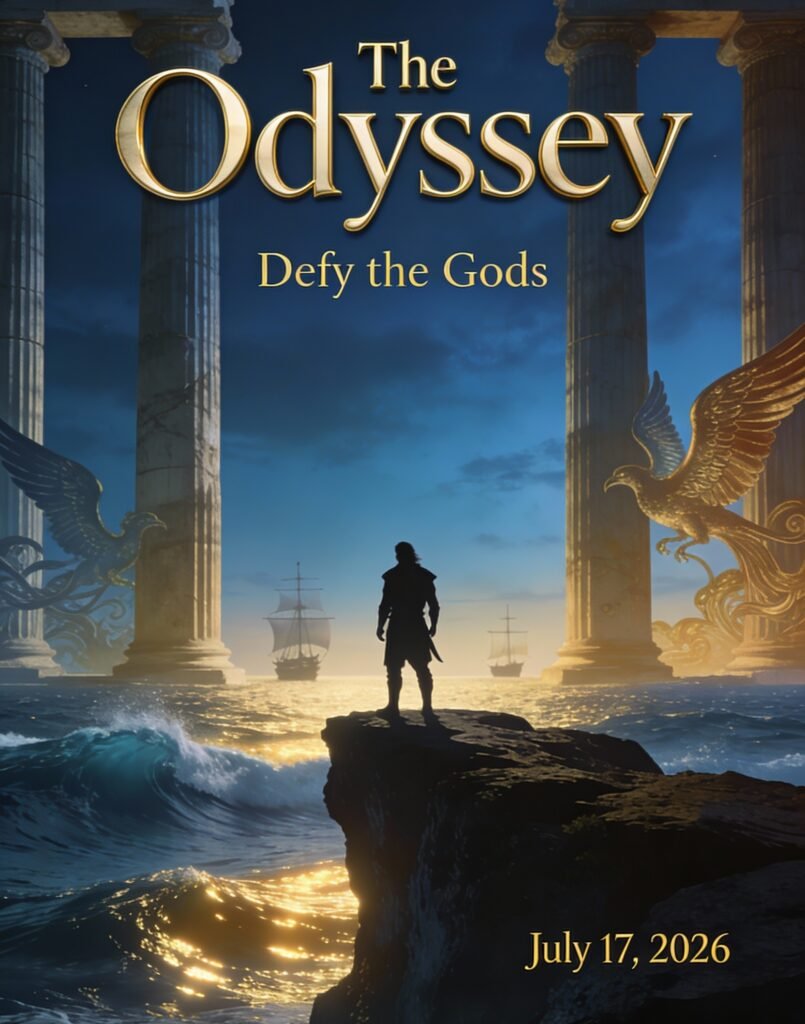
The official trailer release in December 2025 generated significant social media discussion and industry analysis. The film’s mysterious poster, featuring the powerful tagline “Defy the Gods,” went viral when spotted in Los Angeles AMC theatres, creating “a wave of excitement online” with fans praising its “simple yet powerful style.” Industry analysts have noted that Nolan may be the only contemporary filmmaker capable of successfully adapting such an ambitious literary work, with BBC Culture observing that the director has transformed film viewing into significant cultural events.
Online communities and entertainment forums reflect mixed but predominantly enthusiastic responses. Film enthusiasts on platforms like Reddit expressed particular excitement about the period-epic approach, with one commenter noting: “After seeing these images, I couldn’t be more thrilled that it appears to be a period epic…I’m all in for it.” Genre specialists praised the commitment to Homer’s source material, with mythology enthusiasts stating: “The Iliad and the Odyssey rank among my top stories. Christopher Nolan is one of my favorite filmmakers. To say that I’m thrilled would be putting it lightly.” The film has generated expectations that it will deliver “everything audiences expect from a summer blockbuster” and “will be the biggest, most fun film and feel like a myth in itself.”
What This Means for Fans & The Broader Industry
Christopher Nolan’s The Odyssey represents a watershed moment signaling Hollywood’s confirmed commitment to exploring classical narratives through contemporary cinematic technology. The film’s production scale—becoming the first entirely shot on IMAX film cameras—demonstrates the significant financial and artistic investment studios are willing to make in mythology-based content. The star-studded ensemble cast reflects how A-list talent now actively pursues roles in mythological epics, marking a departure from the era when such projects were considered niche or period-piece material.
For audiences seeking substantial narrative experiences, The Odyssey promises intellectual depth combined with spectacular visual production. With Nolan’s signature storytelling style—known for exploring complex themes of heroism, time, and human agency—combined with Homer’s exploration of loyalty, intelligence, and the struggle between mortals and divinity, the film positions itself as both entertainment and artistic statement. The unprecedented early ticket sales strategy and the extended marketing campaign beginning in June 2025 suggest studios anticipate this as a potential record-breaking summer tentpole that could define 2026 cinema.
The film’s success could influence the next decade of mythology-based adaptations, particularly regarding budget allocation and A-list talent recruitment. If The Odyssey achieves critical and commercial success, studios will likely greenlight additional large-scale literary and mythological adaptations, establishing mythology as a primary source for major studio productions.
The Odyssey: Latest Update, Release Date, Cast, and What We Know So Far
Conclusion
Christopher Nolan’s The Odyssey stands as the most ambitious contemporary adaptation of Homer’s epic, combining world-class cinematography, an exceptional ensemble cast, and one of Western literature’s most enduring narratives. Set for release July 17, 2026, the film has already demonstrated unprecedented audience enthusiasm, with early ticket sales breaking conventional marketing timelines and industry expectations. The project encapsulates Hollywood’s renewed interest in ancient mythology, reflecting genuine audience demand—with nearly two-thirds of viewers preferring mythologically-rooted stories to purely original narratives.
The adaptation arrives at a moment when mythology-inspired content dominates global entertainment, with 70% of contemporary films drawing inspiration from classical sources. Nolan’s historical filmmaking approach, combined with the film’s groundbreaking IMAX production methodology, suggests audiences will experience a respectful yet visually revolutionary interpretation of one of humanity’s oldest and most revered literary works. Whether The Odyssey achieves the anticipated critical and commercial success, it definitively represents Hollywood’s strategic pivot toward classical narratives as primary source material for major studio productions.

Asif Ali is an entertainment content creator and movie enthusiast at Movie Trend. I covers the latest movie news, OTT updates, and trending entertainment stories with a focus on accuracy, originality, and reader value.